



What Safety Standards Should Stage Machinery Comply with in the US?
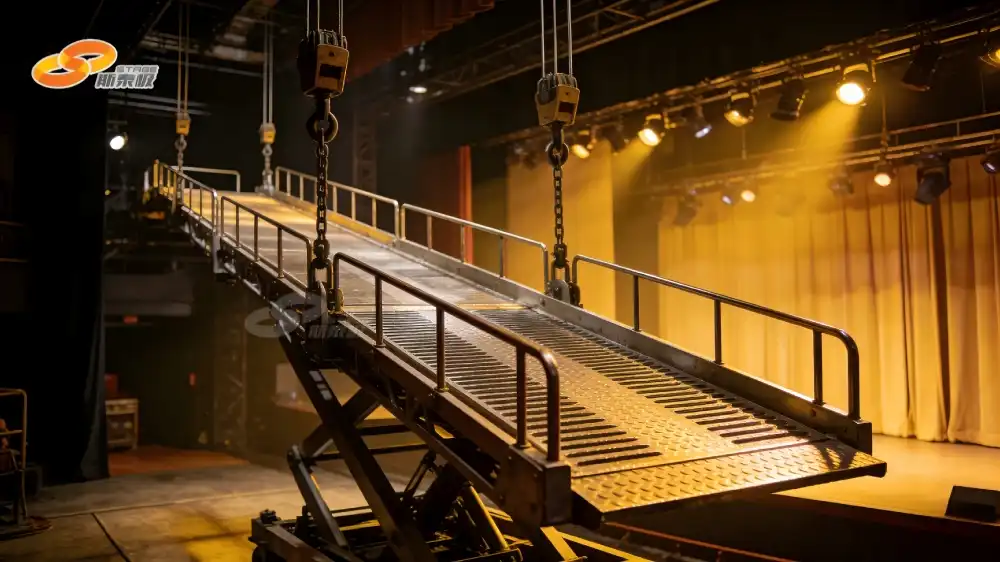
In the United States, stage machinery must comply with a comprehensive regulatory framework that includes OSHA workplace safety standards, ANSI technical specifications, and NFPA fire safety codes. These regulations ensure that all theatrical equipment - from understage lifting platforms to overstage winch systems - meets stringent safety requirements for mechanical integrity, electrical compliance, and operator protection. Understanding these mandatory standards helps venue operators and procurement professionals minimize liability while maintaining optimal performance safety across theaters, music halls, and event spaces.
Understanding the Regulatory Framework for Stage Machinery Safety in the US
There are a lot of different agencies and standards groups in the United States that work together to make sure that theater equipment is safe. ANSI (American National Standards Institute) creates voluntary technical guidelines for entertainment industry equipment, while OSHA (Occupational Safety and Health Administration) sets federal rules that workers operating complex stage systems must follow to stay safe.
OSHA's Role in Stage Equipment Safety
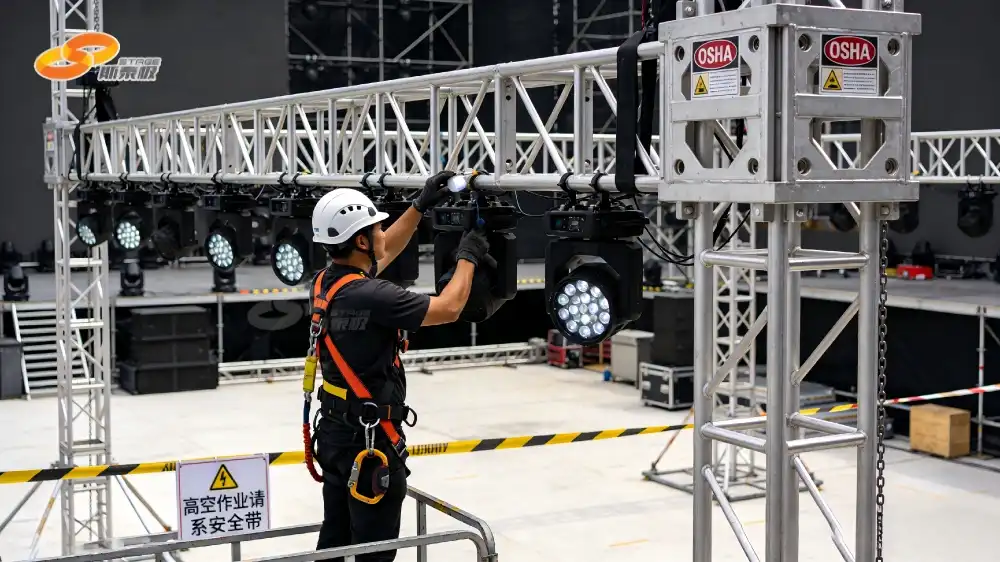
The General Duty Clause of OSHA says that managers must keep their workplaces "free from recognized hazards." This includes all parts of running a stage, like support systems, lifting platforms, and automated scenery equipment. The agency's building rules also apply to traveling shows and temporary stage installations.
As a result of OSHA rules, workers who are working at heights must wear fall protection, follow lockout/tagout processes when maintaining equipment, and get the right training to operate machinery. These standards have a direct effect on how venues train their staff and set up their technical systems.
ANSI Standards for Entertainment Technology
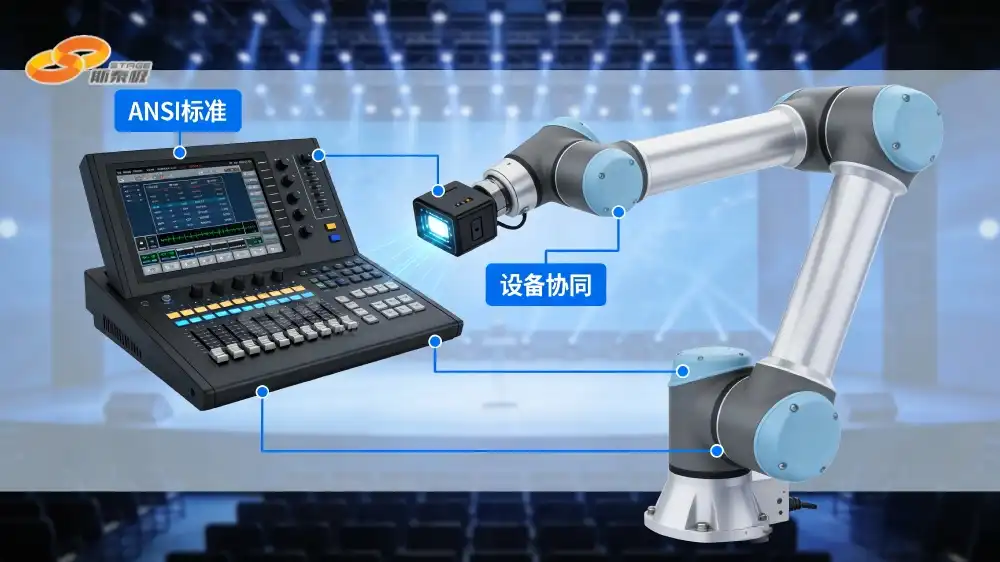
The ANSI E1 line of standards gives detailed technical information on how to build and use entertainment devices. ANSI E1.1 talks about how to build and use structural supports for hanging equipment from the ceiling, and E1.4 talks about human counterweight rigging systems that are popular in traditional theaters.
These standards have an effect on many things, from figuring out how much weight to put on flying systems to making sure that moving tools is safe. ANSI E1.17 sets standards for the design and operation of entertainment lighting control systems that often work with stage machinery. Modern automated systems must also meet these standards.
NFPA Fire Safety Considerations
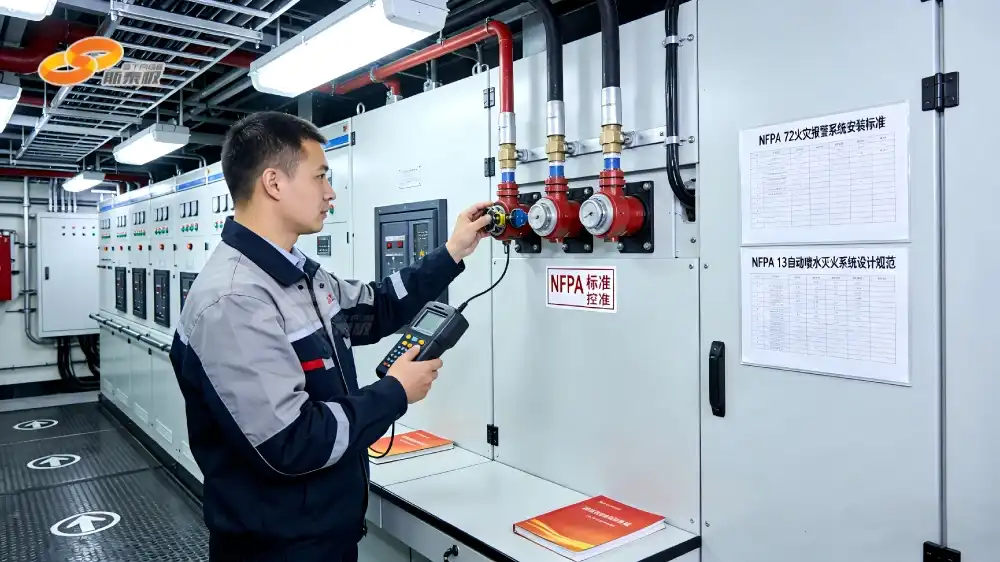
Stage machinery placement and use are impacted by the NFPA 101 Life Safety Code of the National Fire Protection Association, especially when it comes to emergency exits and fire control system access. Under-stage equipment rooms and over-stage machinery connections to water systems are shaped by these needs.
Core Safety Requirements for Stage Machinery Design and Operation
Designing theater equipment includes many important safety areas that work together to keep actors, workers, and audience members safe. These standards affect every part of specifying tools and making decisions about what to buy.
Mechanical Integrity and Structural Safety
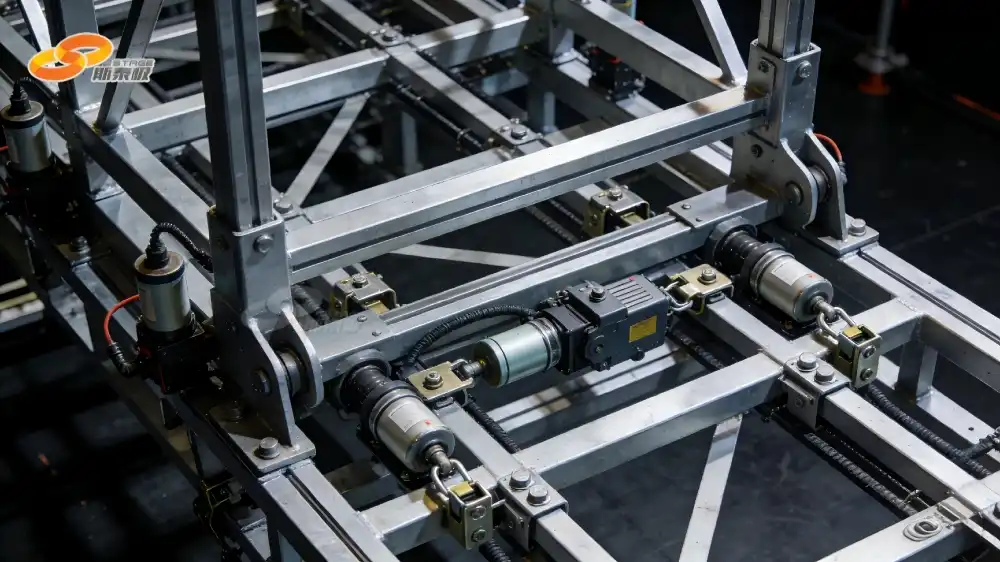
For safe stage equipment design to work, load capacity estimates are essential. Equipment needs to show that it has enough safety factors by going through strict testing procedures that take into account both static and dynamic loading conditions. Regular inspections of structural parts are needed to find possible wear patterns or stress areas.
Another important part of design is fail-safe methods. Lifting systems have more than one redundant stopping system, and automated platforms have emergency stops that can be reached from more than one place. When one piece of equipment breaks, these backup systems make sure that loads don't fall or move around without being controlled.
Electrical Safety and Control Systems
The National Electrical Code (NEC) says that all electrical systems must meet certain standards. These standards include proper grounding, overcurrent safety, and the right size of conductors. Control systems need interlocking systems to keep things from working in dangerous ways and emergency stop circuits that stop all motion right away when they are triggered.
Modern automated equipment has complex tracking systems that check operating factors all the time. These systems can find problems like too many loads, motors that are too hot, or encoders that don't work right, and they can turn off equipment automatically before dangerous situations happen.
Operator Training and Certification Requirements
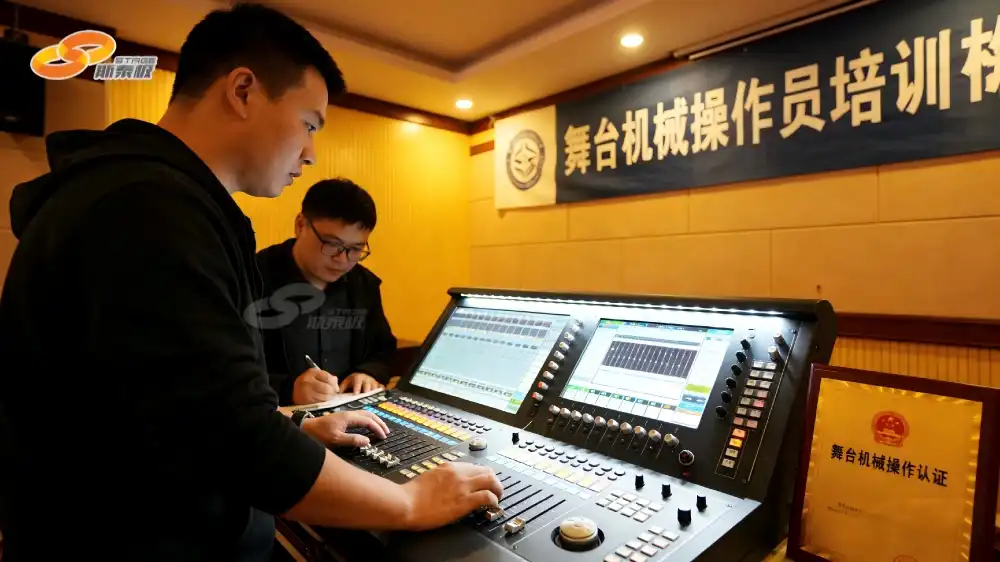
Safety of equipment depends a lot on how well operators are trained and how often they go to school. In many places, technicians have to go through special training to get certified before they can operate complicated machines, especially automated systems that are managed by computers.
Communication methods help multiple operators organize complicated scene changes while the equipment is in use. Accidents are less likely to happen during live shows when there are clear lines of sight, normal hand signals, and headset communication systems.
Best Practices for Stage Machinery Maintenance and Compliance
To stay safe, you have to keep an eye on the state of your tools, how you keep records, and how you do preventive maintenance. These practices make sure that equipment lasts longer and keeps it in line with regulations.
Preventive Maintenance Programs
Scheduled repair times are based on what the maker says should happen, taking into account how often the equipment is used and the surroundings. Touring equipment that gets a lot of use needs to be inspected more often than systems that are permanently fixed, and equipment that is outside needs extra protection against rust and weathering.
During safety checks, documentation is a key part of showing that rules are being followed. Inspecting dates, results, corrective steps, and technician certifications must all be written down in maintenance logs. Digitized tracking systems help places keep detailed records and plan for future repair tasks.
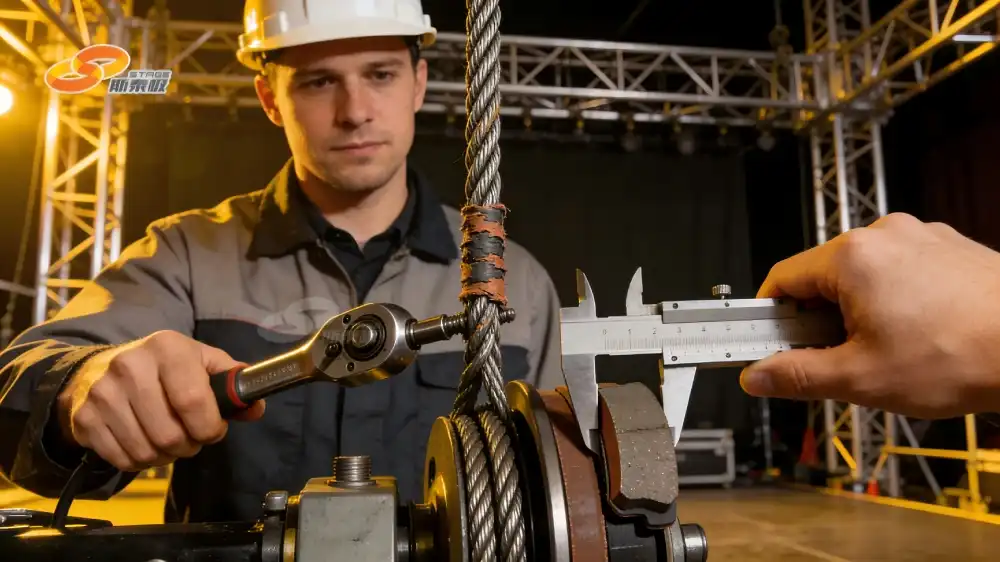
Inspection Protocols and Documentation
Every day before a show, safety systems are checked to make sure they work properly and any clear problems are found before the equipment is used. Every week, wear parts like wire rope, brake linings, and electrical connections are checked, and every month, the structure is checked in more detail.
For most annual checks of stage machinery, trained engineers or approved testers are needed to look at the general state of the system and make sure it meets current standards. These thorough checks often find ways to improve things or things that need to be replaced before they break.
Repair Standards and Parts Management
When fixing something, the original safety gaps must be kept by using the right new parts. Using non-equivalent parts can make safety systems less reliable and insurance coverage null and void, so getting parts from authorized sources is necessary to protect against risk.
Certified technicians know how to fix things and follow safety rules that are specific to each piece of equipment. Their knowledge makes sure that fixes bring back full usefulness without adding new risks or weakening safety systems that are already in place.
Comparative Insights: Automated vs. Traditional Stage Machinery Safety
The switch from human rigging systems to computer-controlled machinery has made modern stages much safer places to be. Knowing these differences helps people who work in buying make smart choices about what tools to buy and how it should be used.
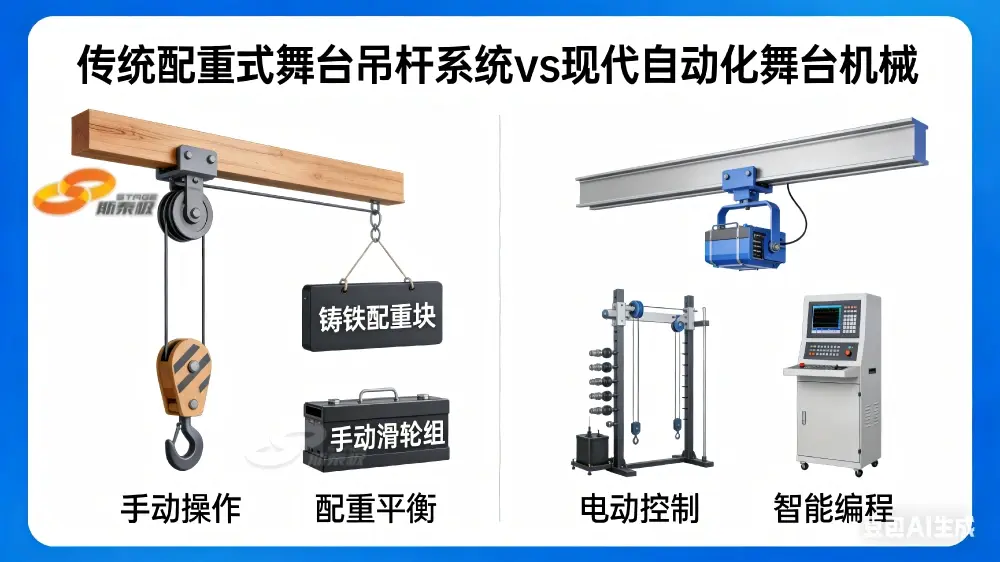
Manual System Characteristics and Risks
Traditional counterweight rigging systems depend a lot on the skill and fitness of the person using them. For these systems to work safely, workers need a lot of training because they have to organize many moving parts while staying aware of the load and any possible dangers.
Manual methods have some benefits, like being easy to use and reliable. When mechanical systems break down, they usually do so in expected ways, and skilled workers can usually tell when something is wrong by noticing changes in how the system feels or acts. In emergency situations, operators often need to step in right away to stop accidents.
Automation Safety Features and Benefits
Multiple sensor technologies are built into automated systems to keep an eye on how they're working all the time. Position encoders check where the equipment is, load cells measure the real weight of things, and safety circuits stop action if it goes outside of certain limits. These machines can do complicated moves with a level of accuracy that is hard to achieve by hand.
Computer-controlled systems are great at keeping safety interlocks between different pieces of equipment while organizing many things at once. This feature lets more complex products happen while lowering the need for skilled operators to coordinate their work.
Cost-Benefit Analysis for Safety Improvements
Automation usually costs more at first, but it can save money in the long run by making things more efficient and reducing the need for workers. Insurance companies are becoming more and more interested in automated systems because they are safer and less likely to cause accidents.
When making a purchase choice for stage equipment, the total cost of ownership should be taken into account. This includes the costs of training, upkeep, and the ability to change how the business works. Automated systems often keep better records of how equipment is used and when it needs to be serviced, which helps fleet management methods work better.
Case Studies and Industry Examples of Stage Machinery Safety Compliance
In the real world, examples show how different types of venues can easily meet safety standards and their own operating needs. These examples show how procurement workers can use these ideas when they are choosing tools.
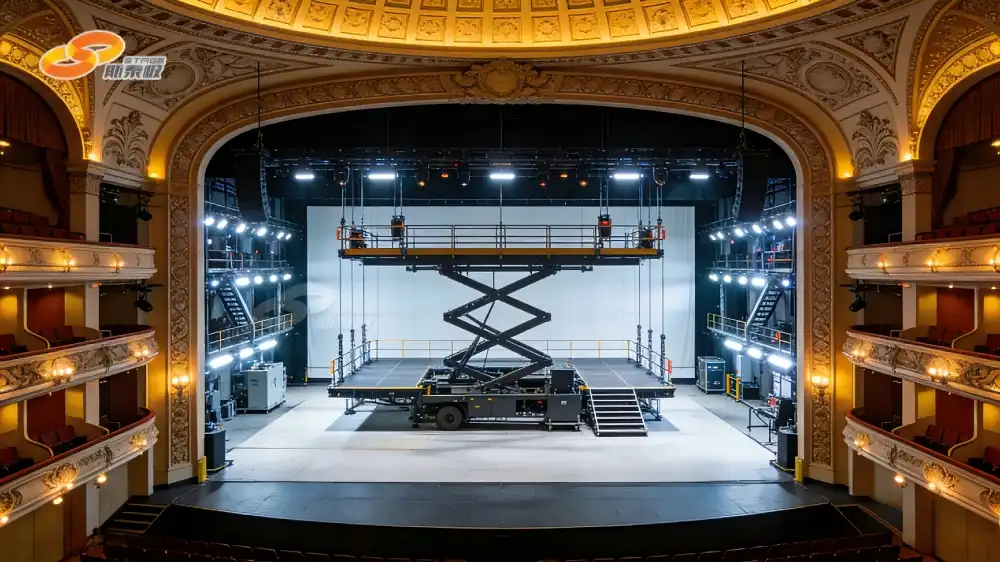
Theater Operations and Compliance Strategies
The renovations at the Lincoln Center show how important it is for big places to balance keeping historical sites and meeting current safety standards. To do this, they had to meet current OSHA and ANSI standards while adding new automated systems to the design that was already there.
Different problems often arise for regional companies, especially when it comes to limited funds and professional staff. A lot of people have had success with modular equipment systems that let them improve slowly while keeping their operations running during change times.
Concert Venue and Touring Equipment Standards
Major music sites like Madison Square Garden show how to keep tools safe for a wide range of productions in high-volume facilities. Their guidelines stress quick setup and strike processes while keeping safety standards the same no matter how complicated the production is.
Touring shows have special problems when they have to move their tools from one place to another while still following safety rules. Successful traveling companies come up with standard processes that can be used in a variety of venues and make sure that everyone stays safe.
Educational Institution Approaches
Universities and schools for the performing arts have to find a mix between safety needs and teaching goals. Many schools use choosing tools as a way to teach, showing students the latest standards in the field and giving them the chance to practice using systems that were chosen by professionals.
These learning spaces are often used to test new tools and methods, giving makers useful information about how they should work and what kind of training is needed in the real world.
Conclusion
To get around the complicated world of stage machinery safety standards, you need to know about a lot of different regulatory frameworks, use thorough repair plans, and choose equipment that meets both operating needs and safety requirements. To be successful, you need to keep up with training, keeping records, and being responsible about managing regulations.
Buying tools that is up to code pays off in the form of lower liability, better working efficiency, and higher safety for everyone involved. As technology keeps getting better, combining automated systems with traditional human tasks opens up a lot of exciting options for places that want to meet modern safety standards while still honoring their working history.
FAQ
What is the difference between OSHA and ANSI standards for stage equipment?
OSHA guidelines are government laws that must be followed. They set minimum safety standards for workplaces, including stage operations. ANSI standards are optional technical guidelines made by experts in the field that give thorough instructions on how to build and use equipment. Even though ANSI compliance isn't needed by law, it is often required by insurance plans and venue contracts as the best way to do things in the business.
How often should stage machinery undergo safety inspections?
How often you need to inspect something relies on the type of equipment, how much you use it, and what the maker recommends. Every day before a show, basic function is checked, and once a year, the whole system is inspected to see how it's holding up. Heavy-duty equipment may need thorough checks every three months, and any equipment that has been involved in an accident needs to be looked at by a professional right away before it can be used again.
Do automated systems require different insurance considerations?
Because automated systems are safer and less likely to have accidents, they often qualify for lower insurance rates. But they might need extra covering for things like software tools and electronic parts. When deciding on coverage terms and rates, insurance companies usually look at operator training programs, upkeep routines, and proof of compliance.
What training requirements apply to stage machinery operators?
Training needs depend on the type of tools and the rules of the place. Complex automated systems usually need licensing programs that are specific to the maker. On the other hand, people who work with traditional rigging systems need to be trained in how to calculate loads, follow safety rules, and handle emergencies. Many places need operators to be re-certified every year and keep learning in order to keep their skills.
How do venue types affect equipment safety requirements?
Regulatory control and practical problems are different for each type of venue. Permanent installations in theaters allow for more advanced safety systems, while touring equipment is designed to be easy to move and set up quickly. School districts have to find a mix between safety needs and learning goals, and outdoor events need extra protection from the weather.
Partner with Sh Stage for Compliant Stage Machinery Solutions
Sh Stage offers complete solutions for theater tools that go above and beyond US safety standards and are a great deal for venues all over the country. As a reputable maker of stage machinery, we use our many years of technical experience and strict quality control to make sure that your equipment complies with all OSHA, ANSI, and NFPA standards. Our experienced team is there for you from the first meeting through installation and ongoing maintenance. They will help you meet all safety requirements and run your business as efficiently as possible. Get in touch with us at info@shstage.com to talk about how our approved stage machinery for sale can improve the performance and safety of your venue.
References
Occupational Safety and Health Administration. "General Industry Standards for Entertainment Industry." Federal Register, Department of Labor, 2019.
American National Standards Institute. "ANSI E1 Series Standards for Entertainment Technology Equipment." ANSI Publications, 2020.
National Fire Protection Association. "NFPA 101: Life Safety Code Requirements for Assembly Occupancies." NFPA Standards, 2021.
International Association of Venue Managers. "Best Practices Guide for Stage Equipment Safety Management." IAVM Publications, 2018.
Entertainment Services and Technology Association. "Technical Standards Program: Safety Guidelines for Stage Machinery." ESTA Documentation, 2019.
Society of Professional Audio Visual Services. "Risk Management Strategies for Live Event Production Equipment." SPAVAS Industry Report, 2020.

USER EVALUATE
Here is the customer's evaluation of us