




What Are the Key Considerations When Upgrading Understage Machinery?
The most important things to think about when updating understage machinery are how well it works with the current infrastructure, how much weight it can hold, how well it can be controlled precisely, how safe it is, and how well it will work in the long run. Modern hydraulic lifting platforms must work with the technical requirements of your place and meet international standards such as CE and EN 17206. The upgrade should improve performance without affecting your production plan. This means you should think about when to install it, how to train your staff, and how easy it is to do maintenance. Smart venues find a mix between making functions better right away and being able to add more space in the future so that their investment stays useful as performance needs change.
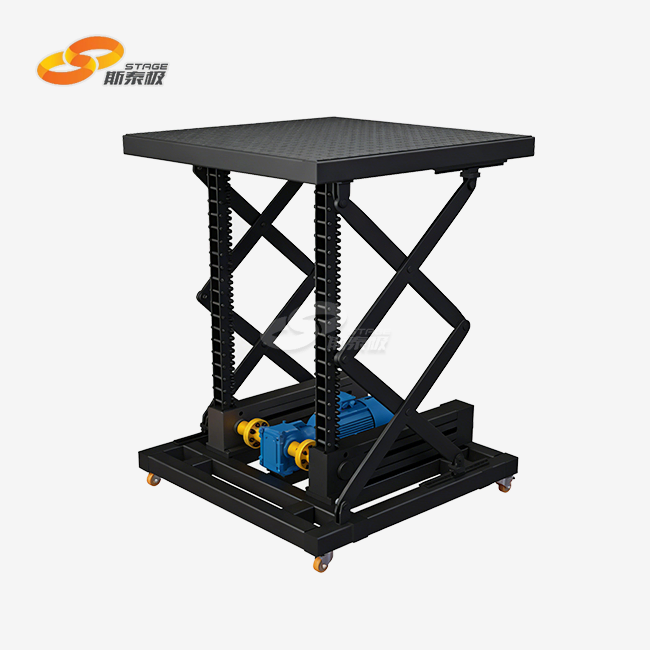
Understanding Understage Systems and the Need for Upgrades
What Exactly Is Understage Equipment?
Understage systems are like the mechanical heart of your performance area; they make the magic that people see above possible. Together, these platforms, lifts, and automation parts move the stage's scenery, performers, and full set pieces in controlled vertical and rotational movements. These systems are used every day by theater professionals to make changes to the orchestra pit during live shows and for dramatic reveals at product launches.
Today's venues depend on precise stage lifts that make noise levels below 45dB, which is low enough for audiences to stay fully engaged in shows. In smaller theaters, the space under the stage floor can be three meters long. In larger opera houses, it can be eleven meters long and is used to house complex hydraulic systems, mechanical locks, and control networks.
Recognizing When Your System Needs Renewal
Several alerts show that your equipment needs care. When repair is needed more often, it means that parts are getting close to the end of their useful life. Control systems that are too old and don't have modern safety features put artists at risk and may be against the law. When you can't carry as much, you can't be as creative, so technical directors have to scale back their big set ideas.
Noise from operations can ruin performances, especially in places like music halls and recording studios that are sensitive to sound. Costs keep going up every year because of wasted energy. Modern lighting rigs and automation systems that don't work with each other can cause frustrating process bottlenecks that make setup times longer and production less flexible.
The Benefits That Come With Strategic Upgrades
Upgraded hydraulic lifting platforms make a real difference in a number of operating areas. Better precision positioning (with ±1mm accuracy thanks to advanced linear encoder feedback) gets rid of safety risks and makes sure that changes go smoothly. Silent operation protects the integrity of art by letting musicians and artists perform without being interrupted by machines.
Modern systems use 30–40% less energy than tools from the last few decades, which saves a lot of money over the life of the system. Better load capacity lets you be more creative by allowing bigger ensemble casts, heavier sets, and vehicles on stage. Reliability goes up a lot, which means less unexpected downtime that can ruin performances and hurt your venue's image.
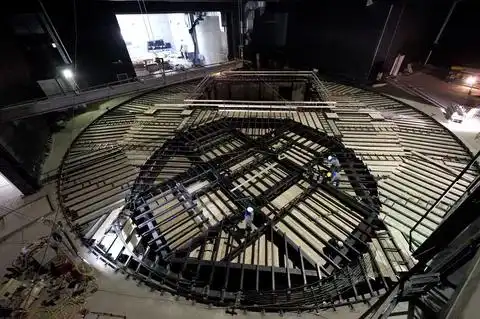
Critical Technical Factors to Evaluate When Upgrading
Structural Compatibility and Space Requirements
Every upgrade choice is based on the physical limitations of your location. The stage floor openings need to be changed to fit the new lift size without affecting the structure's strength. The deepest part of the pit decides how far hydraulic platforms can move. Most systems can move up and down between 4 and 12 meters.
Before the work starts, the load-bearing walls and foundation strength need to be checked. For the system to work well, hydraulic power units need to be placed in a dedicated spot with good air flow, usually within 15 meters of the lifting platform. Power needs range from 1.1kW for small platforms to 3.0kW for heavy-duty uses, so the electrical system must be able to handle them all.
Careful planning is needed to make sure that new understage equipment systems can work with current lighting grids, rigging systems, and control networks. Professional engineering teams do site studies to figure out the best ways to set up things so that they work best while still respecting architectural limits. This planning ahead of time keeps you from having to make expensive changes during installation and makes sure that your improved system works well from the start.
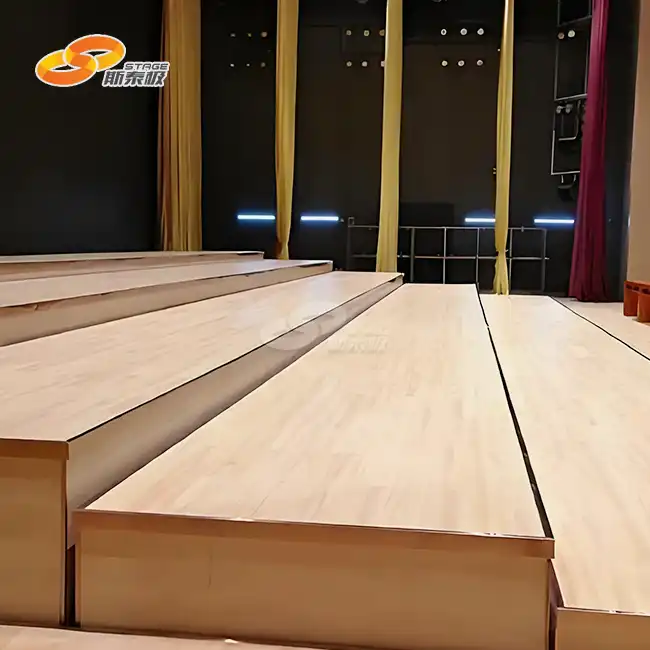
Performance Specifications That Matter Most
The most important specification is load capacity. For normal uses, our hydraulic lifting platforms can handle 500–1000 kg, and for more complex installations, they can handle over 10 tons. The operational speed affects the time it takes to change scenes. Smooth acceleration and deceleration curves that protect actors and equipment are made possible by variable speed control.
Positioning precision affects both safety and how things look. Closed-loop control with linear encoders lets more advanced systems achieve millimeter-level accuracy, getting rid of the pointing drift that is common in older mechanical systems. When vehicles drive onto platforms or artists do choreography that requires them to move in a dynamic way, lateral rigidity is important.
Duty cycle ratings tell you how often your device can run without getting too hot. Places that get a lot of use, like multi-use meeting centers, need ratings for continuous duty, but school auditoriums may work fine with ratings for intermittent duty. The responsiveness of the control interface affects how well the technical crew does their job. For example, current touchscreen systems with programmable presets take a lot less time to set up than older manual controls.
Automation and Smart Technology Integration
Modern stage lifts have Internet of Things (IoT) devices that track hydraulic pressure, temperature, load distribution, and component wear to keep an eye on the health of the system in real time. This information is used by predictive maintenance algorithms to plan service before problems happen. This keeps you from having to make last-minute fixes that mess up your performance schedule.
Programmable control systems can save an unlimited number of position presets, which lets technical directors quickly remember complicated multi-platform configurations. Through unified control protocols, network integration makes it possible for understage lifts, overstage rigging, and lighting devices to work together. This synchronization makes it possible for automated processes to run smoothly that would not be possible to do by hand.
Safety interlocks use multiple independent sensors to find obstacles and keep moving platforms from running into each other. When an emergency stop system goes off, the power goes out right away, and automatic locks lock platforms in place. Double-sealed hydraulic cylinders stop fluid leaks that could damage the floor of the venue, meeting environmental protection standards that site managers are asking for more and more.
Procurement and Supplier Selection Strategies
Evaluating Manufacturer Credentials
Manufacturer approval shows that they care about safety and quality. Look for certifications like ISO quality control, CE marking that shows it meets European safety standards, and EN 14908 standards that are specific to theater equipment. These licenses show that the manufacturing process is regularly checked by a third party and that testing products follows established rules.
When buying stage tools, track record is very important. Suppliers that work with big theaters, opera houses, and performing arts centers have a track record of meeting tough needs. Client references from similar types of venues can give you an idea of how well the system will work in real life and how good the help will be after installation.
If a supplier can offer custom solutions or just catalog goods, that depends on their engineering skills. Manufacturers who offer in-house design services, finite element analysis for structural calculations, and 3D modeling for pre-installation visualization are good for sites that are more complicated. Direct relationships with manufacturers get rid of markups from middlemen and make sure that technical help comes from the people who make the equipment.
Comprehensive Cost Analysis
The price of the tools at purchase is only a small part of the total cost of ownership. Installation costs depend on how complicated the venue is. They can be anywhere from 15% to 25% of the cost of the equipment for simple replacements to 40% for setups that need to make major changes to the venue's infrastructure. International purchases cost more because of shipping and customs clearance. It's easier to do business with experienced sellers who offer flexible shipping terms (FOB, CIF, DAP).
Long-term costs are affected by the need for maintenance. To keep their approval, hydraulic systems need to have their fluids changed, their seals inspected, and their loads tested once a year. Downtime risk is affected by the availability of spare parts. Suppliers who keep parts in stock in the US can ship vital parts within days instead of weeks.
The rules of the understage equipment warranty protect your purchase. For full covering, structural parts should be covered for one year and hydraulic and electrical systems for two years. Good suppliers will train your technical staff, so your team can use the tools safely and effectively right from the start.
Custom Solutions Versus Standard Products
Standard catalog items have shorter lead times (15–30 days) and lower prices for places with common needs. Smaller venues and educational institutions often find that catalog systems work well for them. Customization is useful when engineering needs to be made because of limitations in the building's design, specific load needs, or unique performance requirements.
Custom hydraulic platforms can fit stage openings that aren't perfectly round, work with historic building structures, or include unique features like dual-axis movement. Design consultation makes sure that your system fits the way you work with the types of output you do. Customized main lifting and rotating parent-child stage systems were used at the Grand Theater of Haikou College of Economics. These systems allow for complex, multidirectional motions that would not be possible with standard equipment.
Custom solutions usually take 30 to 45 days to develop from the time the plan is approved until production is finished. This investment gets you equipment that works best for your needs, so you don't have to make the trade-offs that come with using standard goods in non-standard situations.
Safety and Maintenance Considerations Post-Upgrade
Compliance and Operational Safety
New control systems and equipment powers must be taken into account in updated safety rules. Before it can be used, every hydraulic lifting platform should be tested with a standing load of 125% and a dynamic load of 110%. These tests make sure the structure is strong and that the safety factors are correct. Standards for theater equipment require all lifting parts to have 10:1 safety coefficients.
A lot of different safety measures work together to keep accidents from happening. Overload monitors stop the machine from working when the weight is too much for it to handle. When pressed, emergency stop buttons at control desks and along the edges of platforms immediately cut power. If the hydraulic pressure drops, mechanical locking mechanisms go into action immediately to stop the platform from moving. Control plates keep the venue floor from getting damaged along the edges when the platform is moved.
When employees are trained, safety systems go from being theoretical protections to real-world ones. Your expert staff needs to know the limits of operation, what to do in an emergency, and how to do daily inspections. Certification programs make sure that workers show they are skilled before they work alone, which lowers the risk of accidents and keeps insurance companies happy.
Developing Effective Maintenance Programs
Scheduled repair helps equipment last longer and keep up with performance standards. Once a month, inspections check the amount of hydraulic fluid, look at the seals for wear, and make sure the safety system works. Parts are carefully inspected every three months, emergency systems are tested while they're under load, and position monitors are calibrated.
Complete service once a year includes checking the whole system, replacing the hydraulic fluid, and re-certification load testing. Tools for predictive maintenance look at patterns of sound, changes in temperature, and changes in pressure to find problems before they break down. Compared to reactive maintenance strategies, this method cuts the cost of emergency repairs by 60%.
For safety approval and warranty compliance, understage equipment documentation is very important. Maintenance logs keep track of all service actions, including when parts were replaced and how well the system is running overall. Digital maintenance management systems store technical information that is easy for your operations team to access and send automatic service reminders.
Avoiding Common Upgrade Pitfalls
When new equipment doesn't match up with what the system actually needs, this is called process misalignment. Include technical directors and production managers early on in the process of creating specifications to make sure that the new systems will work with the way your place normally runs. Underestimating transition times can cause scheduling problems. You should plan for equipment downtime, staff training, and a slow increase in capabilities.
If you don't properly evaluate the equipment, you could run into expensive problems during installation. It is important to check the electrical capacity, where to put the hydraulic power unit, and the routing of the control cables before the equipment comes on site. If you don't train your operators, your technology will not work as well as it should. This is true for even the most complex systems.
Cost overruns happen because the original cost analysis wasn't done well enough. When judging proposals, you should think about things like installation, commissioning, training, spare parts inventory, and maintenance for the first year. Reliable providers give clear breakdowns of costs that help you plan ahead and avoid costs that you didn't expect.
Industry Trends and Future-Proofing Your Investment
Smart Manufacturing and Industry 4.0 Integration
Digital transformation is reshaping stage technology through connected systems that communicate across networks. Modern hydraulic platforms integrate with venue management software, providing real-time status updates, maintenance alerts, and performance analytics through cloud-based dashboards. This connectivity enables facility managers to monitor multiple venues remotely and optimize resource allocation.
Artificial intelligence enhances predictive maintenance accuracy by learning your venue's specific usage patterns and environmental conditions. Machine learning algorithms detect subtle changes in system behavior that indicate developing problems, scheduling maintenance during non-performance periods to minimize disruption.
Standardized control protocols allow equipment from different manufacturers to work together seamlessly. This interoperability protects your investment by preventing vendor lock-in and enabling phased upgrades as budget permits. Venues can modernize control systems independently from mechanical components, extending useful life and spreading capital expenditure over multiple budget cycles.
Sustainability and Energy Efficiency
Environmental responsibility influences procurement decisions across the entertainment industry. Energy-efficient hydraulic power units reduce electricity consumption through variable-speed pump drives that match power output to actual demand. Regenerative systems capture energy during platform descent, returning it to the electrical supply rather than dissipating it as heat.
Material selection impacts environmental footprint and operational cost. Corrosion-resistant components last longer in harsh environments, reducing replacement frequency and waste generation. Biodegradable hydraulic fluids minimize environmental risk from potential leaks while maintaining performance standards equivalent to petroleum-based fluids.
Green building certifications like LEED increasingly influence venue design specifications. Stage equipment contributes to certification points through energy efficiency, recyclable materials, and low-emission manufacturing processes. Forward-thinking suppliers document environmental performance metrics, helping your facility meet sustainability goals and reporting requirements.
Scalability and Modular Design Advantages
Modular platforms allow capacity expansion without complete system replacement. Initial installations can start with core functionality, adding platforms and capabilities as budgets permit or program needs evolve. This approach suits educational institutions experiencing enrollment growth or event spaces expanding service offerings.
Standardized interface specifications ensure compatibility between installation phases. Control systems scale from basic manual operation to fully automated sequences without hardware replacement, accommodating skill level variations among technical staff and supporting professional development as your team gains experience.
Future regulatory changes are inevitable—equipment designed with adaptability in mind accepts upgrades more readily than purpose-built legacy systems. Programmable controllers receive software updates that add features or address new safety requirements, protecting your capital investment against obsolescence and extending operational lifespan beyond traditional equipment replacement cycles.
Conclusion
Upgrading understage machinery equipment represents a significant investment that impacts your venue's capabilities for decades. Successful projects balance immediate performance needs with long-term adaptability, ensuring today's decisions support tomorrow's creative ambitions. Technical specifications matter, but equally important are supplier reliability, comprehensive support, and proven manufacturing quality. Modern hydraulic lifting platforms deliver silent operation, precision control, and enhanced safety that transform both backstage workflows and audience experiences. Venues that approach upgrades strategically—evaluating compatibility, prioritizing safety, and partnering with experienced manufacturers—position themselves for operational excellence and creative flexibility that distinguish exceptional performance spaces from merely adequate facilities.
FAQ
How long does a typical understage machinery upgrade take?
Project timelines vary based on system complexity and customization requirements. Standard hydraulic platform installations typically complete within 15-30 days from order confirmation to operational readiness, including manufacturing, shipping, and on-site installation. Custom-engineered solutions requiring structural modifications or specialized features need 30-45 days. The installation phase itself usually spans 5-10 days for single-platform systems, extending to 3-4 weeks for multi-platform configurations with integrated control networks. Proper planning minimizes performance schedule disruption—experienced suppliers coordinate installation during venue dark periods or off-season windows.
What budget should we allocate for understage equipment upgrades?
Investment levels depend on platform quantity, load capacity, and automation sophistication. Basic manual-control hydraulic lifts start around $15,000-25,000 for educational applications, while advanced automated multi-platform systems for professional theaters range from $80,000-200,000+. Budget should include equipment (60-70% of total), installation and commissioning (15-25%), training (3-5%), and first-year spare parts inventory (5-8%). Financing options and phased implementation approaches help venues manage capital expenditure while upgrading critical systems.
Can we retrofit automation features onto existing hydraulic platforms?
Modernization of legacy systems is often feasible and cost-effective compared to complete replacement. Control system upgrades add programmable presets, network connectivity, and safety interlocks to mechanically sound platforms. Position feedback sensors enable precision control previously unavailable. Hydraulic power unit replacement improves energy efficiency and reduces noise. Qualified engineers assess structural condition and hydraulic component status to determine retrofit viability—platforms with solid framework and cylinders in good condition are excellent candidates for electronics and control upgrades.
Partner With Sh Stage for Your Understage Machinery Upgrade
Sh Stage has specialized in the design and manufacture of stage automation systems since 2009. As a direct manufacturer through Jiangsu Zhongbang Intelligent Technology Co., Ltd., we provide integrated services from design and production to installation and commissioning, ensuring cost-effective solutions with strict quality control and CE/EN 17206 compliance.
Our main products include hydraulic lifting platforms, stage hoists, rotating stages, orchestra lifts, and customized understage machinery systems for theaters, schools, and performance venues.
We have completed projects such as the Sports & Arts Gymnasium of Tangxia Jinguiyuan School and the Concert Hall of Shenzhen Art School, demonstrating reliable performance across educational and cultural venues.
We offer one-stop support including engineering consultation, customization, installation, training, and 24/7 technical service.
Contact us for project inquiries and cooperation:
Website: www.shstage.com / www.jszbzn.com
Email: info@shstage.com
Tel / WhatsApp: +86 18068792502
As an experienced understage machinery manufacturer, Sh Stage delivers the technical expertise, dependable quality, and responsive support your venue deserves.
References
1. Martinez, R. J. (2021). Modern Stage Technology: Engineering Solutions for Performance Venues. Theatrical Press International.
2. Chen, L. & Thompson, K. (2022). "Hydraulic Systems in Entertainment Applications: Safety Standards and Performance Optimization." Journal of Venue Engineering, 18(3), 112-129.
3. International Alliance of Theatrical Stage Employees. (2023). Stage Machinery Installation and Safety Guidelines: Best Practices for Venue Operators. IATSE Technical Standards Division.
4. Blackwell, S. M. (2020). Theatrical Infrastructure: Design, Installation, and Maintenance of Performance Systems. Academic Press.
5. European Committee for Standardization. (2022). EN 14908+A1:2022 - Machinery for theatres and other places of entertainment - Safety requirements and inspection. CEN Publishing.
6. Yamamoto, H., Fischer, A., & Rodriguez, M. (2023). "Predictive Maintenance Strategies for Stage Automation Equipment: A Comparative Analysis." Entertainment Technology Review, 41(2), 67-84.

USER EVALUATE
Here is the customer's evaluation of us