




How Do I Choose the Best Stage Machinery for a Small Theater?
The best stage machinery for a small theater must strike a balance between performance capacity and available space and money. When making your choice, you should give safety certifications, operational freedom, and long-term dependability the most weight. Quality lifting systems, rigging tools, and control mechanisms are what make stage operations work well. They make it possible to switch between scenes smoothly while still meeting strict safety standards. Knowing the exact production needs of your venue, from simple things like moving the curtains to complicated automated sequences, will help you choose solutions that will improve the experience for the audience without putting too much strain on your budget or technical team.
Understanding Stage Machinery for Small Theaters
Stage gear includes all of the mechanical and automated parts that make plays come to life. It is easy and safe to use these devices to control the set, lighting, curtains, and performance elements.
Core Components You Need to Know
Motors, control systems, rigging infrastructure, and automation technology are what make up the heart of any theater building. Motors provide the lifting power, and control systems make sure that moves are coordinated to within milliseconds. Rigging safely spreads loads across the structure of your building, and automation makes it easier to run complicated sequences without having to do as much by hand. To make smooth performance changes, every part must work together.
If you know these basics, you'll be better able to evaluate offers from suppliers and talk to technical consultants. I work with theater managers, and those who understand these basics make better decisions about what to buy and don't make mistakes during installation that cost a lot of money.
Types of Stage Machinery Systems
Hand-cranked winches or pulley systems are used in manual systems, which are run by people. They don't cost much and don't need much upkeep, but they make production simpler and require a lot of physical work. Electric systems are great for places that have a lot of shows because they can control the speed consistently and keep the operators from getting tired. Hydraulic choices can lift heavy things smoothly and powerfully, but they need to be maintained by people who know what they're doing.
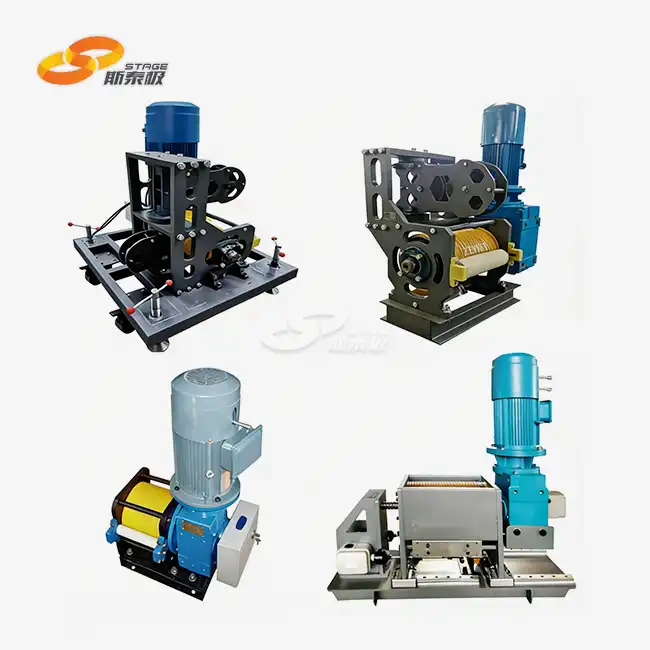
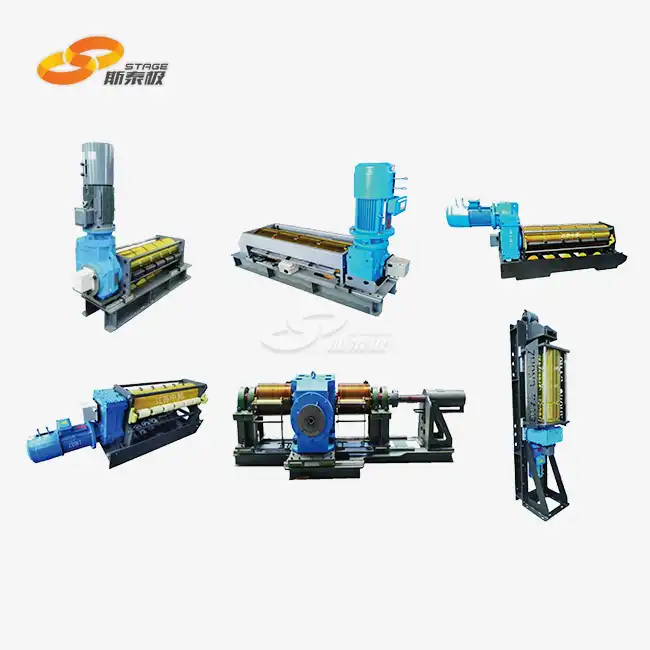
The Stage Multi-Layer Winding Boom Lifting system uses cutting edge electric technology that was made just for theater use. Our ZB-WDJ line can handle loads from 400 kg to 1000 kg and speeds from 0 to 0.5 m/s. Its multi-layer wire rope configuration makes it more stable when moving the curtain, backdrop, and lighting equipment. The spiral umbrella helical gear design makes sure that the operation is quiet, which is very important in small theaters where mechanical noise can distract the audience.
Automation Advantages for Small Venues
Automation transforms production capabilities by enabling precise, repeatable movements that manual systems cannot achieve. Programmable sequences allow operators to focus on artistic timing rather than mechanical coordination. Safety improves dramatically as automated systems include built-in safeguards like overload protection, emergency stops, and travel detection.
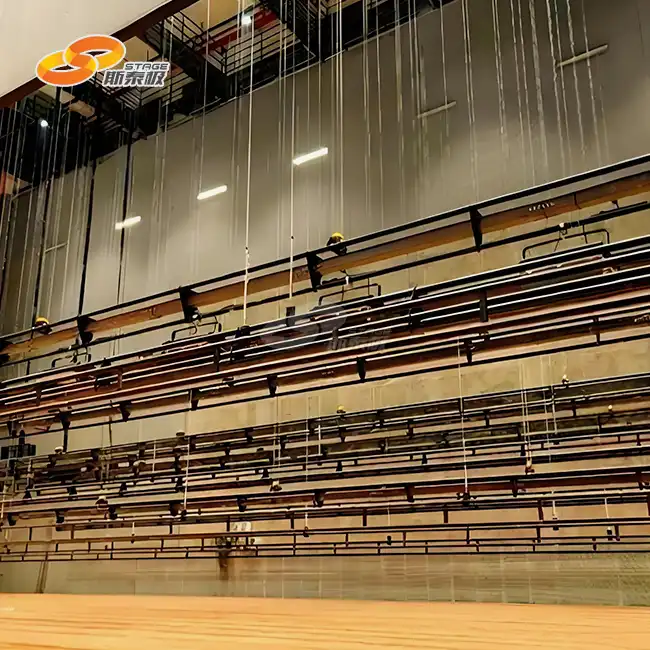
The Zaozhuang Auditorium project in Shandong demonstrates these benefits perfectly. We installed 30 sets of hoist lifting equipment with integrated control systems that manage meeting configurations and performance setups with single-button operation. Technical staff report 60% faster setup times and significantly reduced physical strain compared to their previous manual rigging.
Key Criteria for Choosing Stage Machinery for Small Theaters
Selecting equipment requires evaluating multiple dimensions that impact both immediate operations and long-term sustainability.
Space Constraints and Installation Considerations
Small theaters often have trouble with limited space above the stage, tight hallways for audience access, and limited space under the stage. These physical facts affect the size of the equipment, how it is mounted, and how easy it is to do upkeep. There are clear benefits to using small multi-layer winding systems in this situation. They can store long lengths of wire rope in very small spaces, which means they can go the full distance even when standard single-layer drums can't because of the height of the roof.
Carefully measure the areas that you can use for stage equipment installations, making sure to include the service clearances that technicians need for upkeep. Putting equipment in places that are hard to get to causes problems and risks to safety. Our engineering team offers 3D modeling services that let you see how the equipment will fit in your real venue, so you can find any problems before the fabrication starts.
Budget Realities: Upfront Investment Versus Long-Term Value
The price of the initial buy is only one part of the total costs of ownership. Manufacturers like Sh Stage that make high-quality equipment usually charge more up front, but their products are more reliable, need less upkeep, and last longer. Cheaper options often need to be fixed more often, have parts break down early, and don't have quick technical help when problems happen.
Rental arrangements suit venues with occasional productions or limited capital budgets, though rental fees build quickly for frequent users. Buying makes financial sense for places that are open at least once a week. Find the point at which you break even by comparing the monthly rent over three years to the price of buying the property plus the expected costs of upkeep.
Our flexible minimum order amounts allow for both small test installations and full venue outfitting. This makes professional equipment available to community theaters and schools that used to only have access to consumer-grade options.
Safety Certifications and Compliance Standards
Safety cannot be negotiated. Theatrical lifting equipment must meet CE and EN 17206 standards in international markets, with additional local codes varying by jurisdiction. Certification verifies that designs undergo rigorous engineering analysis and physical testing, including 125% static load tests and 110% dynamic operational tests.
Beyond certifications, examine specific safety features built into equipment designs. Our ZB-WDJ series incorporates travel detection systems that prevent over-travel damage, rope loosening safeguards that alert operators to dangerous slack conditions, overload protection mechanisms that halt operation before structural limits are exceeded, and emergency stop functions accessible from multiple control points. These protections safeguard both operators and performers, while reducing your liability exposure.
Operator training forms the other half of safety management. Equipment capabilities mean nothing if operators lack proper instruction. We provide comprehensive training programs covering normal operation, emergency procedures, basic troubleshooting, and preventive inspection protocols, ensuring your technical staff develops competence and confidence.
Matching Stage Machinery Solutions to Theater Needs
Different theatrical operations demand distinctly different equipment specifications and configurations.
Segmenting by Usage Intensity and Production Complexity
Community theaters presenting quarterly productions have fundamentally different needs than performing arts academies running daily rehearsals and weekend performances. Usage frequency influences durability requirements, maintenance intervals, and control system sophistication.
Low-intensity venues benefit from simplified manual or basic electric systems that prioritize reliability over advanced features. Moderate-intensity operations need electric systems with programmable controls that streamline repetitive setups. High-intensity facilities require fully automated solutions with networked control, real-time monitoring, and redundant safety systems.
Production complexity adds another dimension. Simple curtain movements demand basic single-point lifting equipment, while elaborate productions with synchronized scenic elements require multi-point systems with precision coordination. The Binhai College project exemplifies moderate complexity—we installed 25 sets of hoisting equipment with unified control, enabling student productions to explore creative staging while maintaining straightforward operation that faculty can teach effectively.
Standardized Products Versus Custom Solutions
Off-the-shelf equipment offers faster delivery, lower costs, and proven reliability. Our ZB-WDJ series includes four standard models (400kg, 600kg, 800kg, 1000kg capacity) covering typical small theater requirements. Standard designs undergo extensive field testing, with any design flaws identified and corrected before you purchase.
Custom engineering becomes necessary when venues have unusual dimensions, historic preservation constraints, or specialized artistic requirements. Our design team provides ODM/OEM services, modifying standard platforms to accommodate unique load distributions, integrating equipment into architecturally sensitive environments, and creating bespoke automation sequences. The Shanghai Sanchuan Film & Television Base project required 66 hoisting units with varied specifications plus three specialized curtain lifting systems—customization that standard products couldn't address.
Integration with Lighting, Sound, and Other Systems
Modern productions demand coordination across multiple technical disciplines. Stage equipment must communicate with lighting consoles, sound playback systems, and video projection equipment to create cohesive artistic moments. Network-capable control systems enable this integration through standard protocols like DMX, Art-Net, or proprietary interfaces.
Modular designs support phased upgrades, allowing theaters to start with basic lifting capabilities and add automation sophistication as budgets permit. This scalability protects your initial investment while providing growth pathways aligned with expanding artistic ambitions.
Evaluating Leading Stage Machinery Brands and Suppliers
Your equipment supplier relationship extends far beyond the initial transaction, making careful vetting essential.
Quality Standards and Manufacturing Credentials
Manufacturers with a good reputation have complete quality control systems that cover everything from verifying the design to finding parts to checking the finished product. While ISO certifications show that quality standards are being followed, standards that are special to theaters, like EN 17206, offer more relevant assurance.
Jiangsu Zhongbang Intelligent Technology Co., Ltd. is where Sh Stage is made. It is our dedicated production base and it has precision machining centers, automated welding stations, and strict testing facilities. Before it is shipped, every product goes through a series of checks to make sure it meets the requirements for size, quality, assembly, and functionality. This method of making things is consistent across thousands of installations on five countries.
Supplier Credibility and Customer Validation
Use a variety of sources to learn more about potential sellers. Independent reviews on industry sites show problems that keep happening that aren't shown in marketing materials. Ask for references from installations that are similar to your project, and then call those references to talk about how well the equipment worked, how well the installation went, and how quick the company was after the sale.
Suppliers who have been around for a while show that they can be trusted by communicating openly, providing full technical documentation, and being willing to address concerns directly. Since 2009, we've worked with theaters, event companies, schools, and broadcasting facilities in more than 50 countries, building long-term relationships by always delivering on our promises.
Installation Expertise and After-Sales Support
Without the right installation, even the best tools won't work. Suppliers who offer "turnkey" solutions, which include planning, fabrication, delivery, installation, commissioning, and training, make sure that all the parts of the system work together properly. When problems happen, this all-encompassing method stops people from pointing fingers because one organization is fully responsible.
Support after the sale is what sets good providers apart from average ones. We have a multilingual expert team that works around the clock to answer questions about how to fix problems, send replacement parts, and do regular follow-up consultations. As part of our service plan, we offer preventive maintenance programs that find problems before they become breakdowns. This means that your equipment will be up and running for longer during times when it needs to be.
Conclusion
When choosing stage machinery for small theaters, it's important to take into account the space available, the cost of the equipment, and how the theater will be used. Good lifting systems with the right amount of technology make it easier to make things while still meeting safety standards. Give priority to providers who can help with everything, from planning to installation and ongoing support. The right equipment relationship can completely change what your venue can do, letting artists create works that captivate audiences and make your investment worthwhile through years of reliable performance.
FAQ
What capacity lifting equipment does a typical small theater need?
Most small theaters operate effectively with 400kg to 800kg capacity hoists for curtains, lighting, and modest scenic elements. Venues presenting elaborate productions with heavy scenic pieces may require 1000kg or higher capacities. Calculate your maximum simultaneous loads including safety margins, then select equipment rated 25% above those figures. The Stage Multi-Layer Winding Boom Lifting ZB-WDJ series covers this entire range with four standard models, accommodating growth as your production ambitions expand.
Should I choose manual or electric stage machinery?
Electric systems deliver superior performance for venues operating weekly or more frequently, offering consistent speed control, reduced operator fatigue, and automation possibilities that manual equipment cannot match. Manual systems suit theaters with occasional productions and extremely tight budgets, though they limit artistic possibilities and demand significant physical effort. The operational efficiency and safety advantages of electric equipment typically justify the higher initial investment for active venues.
How much does professional stage machinery cost?
Quality electric hoisting systems range from $3,000 to $12,000 per unit depending on capacity, features, and customization requirements. Complete small theater installations including multiple hoists, control systems, rigging infrastructure, and professional installation typically cost $50,000 to $200,000. These figures reflect direct manufacturer pricing from established suppliers like Sh Stage. Budget accordingly for ongoing maintenance expenses, operator training, and periodic component replacement to ensure long-term operational success.
Partner with Sh Stage for Reliable Theater Equipment Solutions
Sh Stage has specialized in the design and manufacture of stage automation systems since 2009. As a direct stage machinery manufacturer with integrated production through Jiangsu Zhongbang Intelligent Technology Co., Ltd., we provide end-to-end services from design and fabrication to installation and commissioning, ensuring cost-effective solutions with strict quality control.
Our core products include multi-layer winding boom lifting systems, stage hoists, rotating platforms, lifting stages, and customized theater equipment for performance venues and entertainment complexes.
We have completed projects across educational institutions, cultural centers, and theaters in over 50 countries, demonstrating reliable engineering performance and consistent project delivery.
We offer one-stop support including customized design, installation, training, and long-term maintenance services, backed by responsive technical assistance.
Contact us for project inquiries and cooperation:
Website: www.shstage.com / www.jszbzn.com
Email: info@shstage.com
Tel / WhatsApp: +86 18068792502
As an experienced overstage machinery manufacturer, Sh Stage delivers the technical expertise, dependable quality, and responsive support your venue deserves.
References
1. Johnson, M. (2021). Stage Machinery Systems: Design and Implementation for Modern Theaters. Theater Technology Press.
2. Williams, R. & Chen, L. (2022). "Safety Standards in Theatrical Rigging: A Comparative Analysis of International Codes." Journal of Entertainment Technology, 18(3), 112-128.
3. Peterson, K. (2020). Small Venue Production: Technical Solutions for Limited Spaces. Performing Arts Publishing.
4. Anderson, T. (2023). "Automation in Small Theater Environments: Cost-Benefit Analysis and Implementation Strategies." Technical Theater Quarterly, 41(2), 89-104.
5. Martinez, S. (2022). Stage Engineering Fundamentals: Mechanical Systems for Performance Venues. Professional Stage Equipment Institute.
6. Thompson, J. & Liu, W. (2021). "Preventive Maintenance Protocols for Theater Lifting Equipment: Best Practices from International Venues." Venue Management International, 15(4), 67-82.

USER EVALUATE
Here is the customer's evaluation of us