




Custom Stage Platform Solutions for Unique Venue Layouts
Custom stage platform options are made to fit the specific needs of theaters, event places, and culture centers in terms of space and operation. Unlike off-the-shelf setups, customized platforms can adapt to uneven floor plans, limited ceiling heights, and complicated load distribution needs while still being safe and structurally sound. The engineered systems in this study combine modular lifting mechanisms, horizontal translation capabilities, and precise-controlled automation to make the most of limited or unusual spaces. They do this by improving setup efficiency, audience experience, and operational flexibility for B2B venue operators across the US.

Understanding the Challenges of Unique Venue Layouts
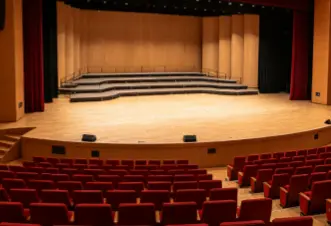
There are mechanical problems that come up in every performance area in their own way. In old theaters, the proscenium may be bent and the floor may be uneven. In modern convention centers, however, the space has to be quickly reconfigured between business meetings and live entertainment. These physical facts make things very hard for people who run venues and production teams.
Irregular Geometry and Space Constraints
Venues don't usually have standard rectangular shapes. We often work with venues that have circular auditoriums, stadium-style seats, and performance areas with more than one level that need carefully designed stage platform systems. When holding equipment across uneven floor structures, load-bearing calculations get a lot more complicated. This is especially true in industrial buildings that have been updated or historical sites where the way the buildings were built originally limits the installation options.
Safety and Accessibility Requirements
To make sure that the platform meets ADA mobility standards and OSHA safety rules, it needs to be carefully designed. Access for wheelchairs, escape routes in case of an emergency, and fall safety must all be built into stage systems without affecting their ability to act. Many public and educational places have to deal with extra safety concerns for their visitors, which means they need to have engineering certifications and extra safety features that regular tools can't provide.
Operational Flexibility Needs
Today's venues can do more than one thing. For example, a university theater can host student plays one week and professional touring shows the next. Within hours, meeting centers can change from trade shows to music settings. For this wide range of operations, platforms must be able to change height, grow in size, and work with different support loads. Traditional fixed-stage setups aren't flexible in this way, so places have to turn down lucrative bookings or put up with less-than-ideal arrangements that hurt the audience's experience and their ability to make money.
Core Principles of Custom Stage Platform Solutions
Custom systems that work well match the need for precise engineering with the needs of everyday operations. Our method focuses on modular design architecture, which lets venues increase performance levels without having to update the whole system.
Modular and Flexible Design Architecture
We build stage platforms with standard sections of parts that fit together using carefully polished connection points. The main platform is 40 feet by 60 feet and can be split into twelve separate parts, each with its own hydraulic control and load tracking. This modularity lets venue owners make thrust stages, orchestra pits, runway extensions, or stacked seating platforms with the same collection of parts. This saves a lot of money on capital costs compared to buying separate equipment for each setup.
Advanced Material Selection
The metal extrusions in our platforms are made for aircraft use, and the marine-grade plywood floor surfaces have been treated with anti-slip coatings that meet ASTM E303 standards. The aluminum framework is very strong for its weight—it can hold up to 500 kg/m² of spread loads while being 40% lighter than steel buildings of the same size. This lighter weight makes installation easier in places where cranes can't go and lowers the load on the supports of ancient buildings.
Seamless Infrastructure Integration
Custom platforms have to work with the electrical wiring, network cables, and support systems that are already in place. We build cable management paths right into the structures of the platforms, making it easy to route power, DMX lighting control, and audio signal lines. During the planning process, our engineering team works with venue technical directors to map out where current utilities are located and coordinate connection interfaces so that there are no changes to be made to the field during installation.
Rapid Assembly Protocols
When putting on an event, time is money. Our platforms have connection methods that don't need any tools. They use cam-lock screws and self-aligning guide pins. With a four-person crew, a standard 1,200-square-foot platform can be set up in less than 90 minutes. This is much faster than regular bolt-together systems, which take four hours or more. With hydraulic leveling legs, floor imperfections up to 150 mm can be quickly fixed, so you don't have to spend time shimmying by hand like you do with regular platforms.
Comparing Custom Stage Platforms: Key Features and Benefits
When procurement professionals look at stage platform solutions, they should look at certain performance traits that set custom engineering products apart from standard products.
Configuration Versatility
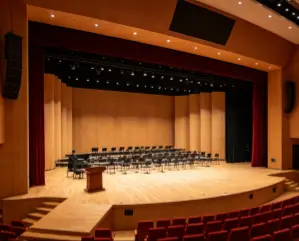
Asymmetrical layouts can't be handled by normal goods, but custom platforms can. Our combination of three main lifting platforms, five sub-stages, and five specialized water pool platforms in the Yanji Dinosaur Kingdom Jindou Art Theater project showed that we could do this. This complicated set-up made performance spaces that were dynamic in a way that wasn't possible with regular rectangular stage decks. It made it possible for complex water-based theater effects to be timed with the movement of the vertical platform.
Enhanced Safety Systems
In addition to basic safety features required by law, our systems have a number of extra safety features that work together. Each hydraulic cylinder has built-in pressure sensors that track the spread of load in real time. If load imbalances go over 5%, programmable logic controls stop movement automatically. When platforms stay still for more than 60 seconds, mechanical locks automatically engage. This stops unplanned movement even if the hydraulic system fails completely.
Operational Efficiency Gains
The installation at the Shenzhen XX World Theater shows how to make things more efficient in the real world. The venue was able to switch between music and theater settings in 35 minutes, compared to six hours with their old equipment. This was made possible by our double-deck lifting platform and three single-deck units. This feature let the venue book shows in the afternoon and evening on the same day, which, according to reports from venue management, increased annual income by 27%.
Real-World Performance Validation
We put in a full system at the Suzhou High-speed Railway New Town Athletic Hall. It has 50 big cable reels with automatic rope setup and 32 single-point hoists that hold up a 2,000-square-meter steel grid structure. It's hard for this complicated rigging system to handle loads that are spread out over 18,000 kg while keeping placement accuracy within ±2mm. This level of accuracy is needed to safely hang large video screens and lighting grids above concert and sports venues.
How to Choose the Right Custom Stage Platform for Your Venue
To pick the right stage platform systems, you need to carefully look at the technical needs and the supplier's abilities. We suggest that buying teams think about a number of important choice factors.
Venue-Specific Technical Assessment
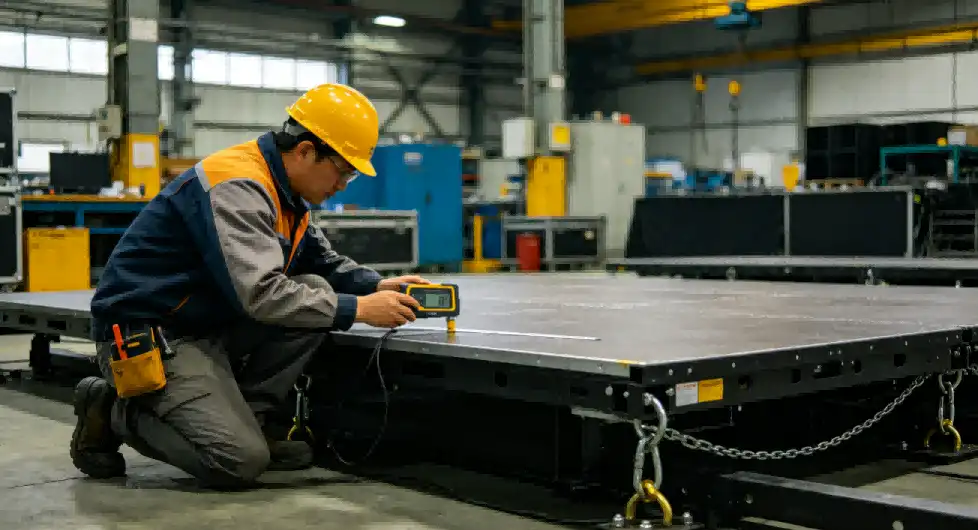
Carefully write down the actual limits of your building. Check the distances from the floor to the grid at several locations, look for structural beams that might get in the way of placing the platforms, and make sure that the current floor structures are certified for their load capacity. Make a detailed event calendar that shows the usual setups that you'll need during the working year. This paperwork helps engineering teams find the best platform sizes, lifting capacities, and control system designs based on how you actually use the equipment, not just on general requirements.
Supplier Qualification Criteria
Check the manufacturer's certifications, such as ISO 9001 for quality control and CE marking to make sure they follow safety rules for machines. Ask for proof of their structural engineering licenses and professional liability insurance that covers equipment breakdowns. Look at the supplier's list of completed projects and look for setups in venues that are similar to yours. A manufacturer that has worked with business event spaces before might not have the specific knowledge needed for theater uses that require complex rigging integration.
Comprehensive Service Scope Evaluation
Custom systems need a lot of help after the product is delivered. Check to see if the suppliers can offer design advice. For example, can their engineering team produce thorough CAD drawings and finite element analyses that show they follow local building codes? Check the installation services to see if the seller sends factory-trained techs or hires local workers to do the work. Look into training programs and make sure that your expert staff learns how to operate, fix problems, and do preventative maintenance by doing it themselves.
Financial Structure Considerations
Platform systems require big investments of money. Simple installs cost around $150,000, while complicated multi-platform theaters cost over $2 million. Look at the total cost of ownership, which includes repair contracts, an inventory of spare parts, and the regular safety checks that insurance companies demand. Some makers offer lease-to-own plans that help keep capital budgets in check and give customers ways to update as technology changes. The warranty coverage, response times for technical help, and ways to increase capacity as place needs grow should all be clearly spelled out in the contract terms.
Implementing and Optimizing Custom Stage Solutions
For stage platform rollout to go smoothly, design, manufacturing, installation, and ongoing operational support must all be coordinated by organized project management.
Structured Implementation Process
Before starting a platform project, our tech team does a full site inspection. We use laser scanning to make accurate 3D models of your building. These models help us find space problems and find the best places to put equipment before production starts. This upfront technical investment keeps expensive changes from having to be made in the field during installation. From signing the contract to final completion, our normal project takes 16 to 24 weeks. This includes approval of the design, fabrication, shipping, installation, and training of operators.
Comprehensive Training and Documentation
We offer training classes with different levels for different types of users. Technical directors learn a lot about programming control systems, which lets them make custom moving patterns for different shows. Stage crew members learn how to run the show every day, do pre-show safety checks, and fix basic problems. The people who work in facility repair are trained in detail on how to service hydraulic systems, check electrical parts, and make mechanical adjustments. All of the training is written down in customized operation guides that include setup diagrams and troubleshooting flowcharts that are special to each place.
Preventive Maintenance Protocols
The life of a platform rests on how well it is maintained. We set up preventative maintenance plans that are based on how often your venues are used. For example, venues that get a lot of use should be inspected every three months, while venues that get average use should be serviced every six months. As part of routine maintenance, hydraulic fluid is analyzed, structural link torque is checked, electrical insulation is tested, and the control system is calibrated. With our remote diagnostic tools, techs can check on the performance of the platform over safe internet connections and find problems before they stop operations.
Performance Measurement and Optimization
We help our clients come up with key performance indicators that measure how well their platform systems are working. Standard designs' average setup time, unexpected downtime, the cost of upkeep per hour of operation, and user happiness scores from technical staff are some of the metrics that are used. Performance reviews every three months find ways to make things better, like changing how things are done, adding new software to make the control system work better, or making small changes to hardware to meet changing venue needs. This method to continuous growth makes sure that platform systems give the most value for as long as they are used, which is usually more than 20 years with proper maintenance.
Conclusion
Custom stage platforms change what a venue can do by solving the unique safety, operating, and space problems that standard solutions can't. These systems make setup faster, setting more flexible, and the audience experience better through modular design, high-tech materials, and precise engineering. For execution to go well, the supplier must be carefully chosen, the site must be thoroughly evaluated, and ongoing optimization must be backed by maker knowledge. When venues engage in properly designed custom platforms, they gain a competitive edge through more booking options and lower operational costs. This sets them up for long-term success in an entertainment market that is becoming more demanding.
FAQ
What distinguishes custom stage platforms from standard modular systems?
What makes unique stage platforms different from regular modular systems? Custom platforms have engineering that is made to fit the size, load requirements, and operating processes of your site. Standard modular systems come in set sizes and capacities that might not work with uneven floor plans or specific performance needs. Custom solutions work with the infrastructure you already have and offer control system code that fits the way your events usually are set up.
How long does custom platform design and installation typically require?
How long does it usually take to build and install a unique platform? Depending on how complicated the system is, the whole job can take anywhere from four to six months. This includes helping with the design and getting engineering approval, making the product and making sure it meets quality standards, sending logistics, setting it up on-site, and teaching the user how to use it. With faster production schedules, rush jobs can be finished in just 12 weeks, but the price usually goes up.
Can custom platforms adapt to last-minute configuration changes?
Can special platforms handle changes to the setup at the last minute? Modular construction and programmable settings in well-designed custom systems give you a lot of freedom. Operators can make and save as many setup options as they want, which makes switching between different stage layouts quick and easy. The amount of time needed for physical reconfiguration varies on the size of the platform, but it usually takes between 30 and 90 minutes for trained teams to make full layout changes.
Partner with Sh Stage for Engineering Excellence in Custom Platform Solutions
Since 2009, Sh Stage has been a premier direct manufacturer specializing in high-precision stage systems. We offer factory-direct pricing and ISO/CE-certified quality without middleman markups.
We specialize in custom hydraulic lifting platforms, rotating stages, and the innovative mobile Stage Platform Truck—a self-contained hydraulic unit featuring 500kg/m² load capacity and built-in power.
Our engineering excellence is proven in landmark convention centers, complex multi-platform theaters, and dynamic entertainment venues with advanced automation globally.
We offer one-stop support—from CAD design and factory testing to professional installation and 24/7 multilingual technical assistance—ensuring seamless operational success.
Contact us for tailored engineering proposals and quotes:
Email: info@shstage.com
WhatsApp: +86 18068792502
Website: www.shstage.com / www.jszbzn.com
References
Thompson, R. (2021). "Structural Engineering Standards for Performance Venue Platforms." Journal of Entertainment Engineering, Vol. 34, No. 2, pp. 112-129.
Martinez, S. & Chen, L. (2020). "Safety Systems in Automated Stage Machinery: A Comparative Analysis." International Conference on Theater Technology Proceedings, pp. 245-263.
Anderson, K. (2022). "Modular Design Principles for Multi-Function Event Spaces." Venue Management Quarterly, Vol. 18, No. 4, pp. 67-81.
Williams, P. (2019). "Life-Cycle Cost Analysis of Custom vs. Standard Stage Equipment." Entertainment Facility Economics Review, Vol. 12, No. 3, pp. 134-148.
Rodriguez, M. (2023). "Hydraulic System Reliability in Theater Platform Applications." Stage Technology International, Vol. 29, No. 1, pp. 88-103.
Foster, J. & Liu, W. (2021). "Integration Challenges in Retrofit Stage Machinery Installations." Cultural Venue Engineering Digest, Vol. 15, No. 2, pp. 201-217.