




Top-Rated Rotating Stage Platforms for Theaters\
Understanding rotating stage technology is important if you want to find reliable theater equipment that can turn ordinary shows into unforgettable events. A rotating stage platform uses precise engineering and high-tech automation to make scene changes smooth. This lets directors make productions that are visually beautiful and captivate audiences from all sides. Choosing the right turntable system has a direct effect on the quality of the production, how efficiently the business runs, and how happy the audience is. This is true whether you are in charge of a national theater, planning a big event, or creating an immersive entertainment experience. We will talk about the technical details, operational benefits, and buying factors that make professional-grade rotating platforms different from basic ones in this guide.
Understanding Rotating Stage Platforms: Components, Types, and Benefits
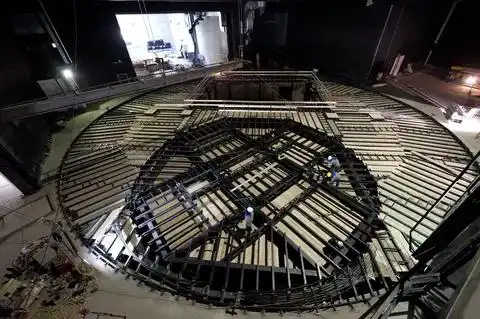
Modern turntable systems represent sophisticated electromechanical solutions engineered for demanding theatrical environments. At Sh Stage, our rotating stage lift platforms integrate motors, reducers, flexible columns, linear guides, scissor support frames, and precision rotation mechanisms into cohesive systems that deliver both vertical elevation and horizontal rotation.
Core Components That Define Performance Quality
The skeletal parts of a professional turntable are what hold it together. Our systems are made from high-quality carbon steel or stainless steel, which gives them the power to hold loads of up to 4 tons. The scissor lift is made with linear guide systems that keep it stable as it rises and falls between 0.5 and 5 meters. Precision slewing ring bearings are used in the rotation mechanism to make it possible to move in all directions smoothly and evenly distribute weight across the platform area.
Control systems are what give these mechanical skills their intelligence. Variable frequency drives control rotation speeds between 0.2 and 3.0 RPM, so users can change the speed of the movement to meet their own creative needs. This programmable control can place things to within ±2mm, making sure that the actors and the set always end up exactly where they're supposed to be during complicated dance routines.
Motorized Versus Manual Operation Models
Professional installations mostly use electric motorized systems because they work the same way over and over again, even after thousands of rounds. Hydraulic lifting mechanisms have the power density to move big loads while keeping noise levels below 50dB, which is very important for places like opera houses and recording studios where background noise can ruin the quality of the music. Even though manual systems are cheaper at first, they aren't accurate or reliable enough for modern productions, especially when they're connected to lighting boards and automation controls through DMX512 protocols.
Operational Advantages That Transform Productions
Theatrical creativity expands dramatically when directors can elevate and rotate scenery simultaneously. This dual-axis capability creates spiral effects impossible with fixed platforms, enabling dramatic reveals where performers emerge from below stage level while rotating into optimal viewing positions. Rapid scene changes occur without visible crew intervention, maintaining narrative immersion while reducing intermission duration. The compact design minimizes pit depth requirements, making these systems viable even in venues with spatial constraints.
Comparing Top-Rated Rotating Stage Platforms: Sh Stage vs Competitors
Procurement professionals evaluating turntable options face decisions that influence production capabilities for decades. Understanding the distinctions between fixed and rotating platforms, along with the technological advantages that separate manufacturers, guides investment toward solutions that deliver long-term value.
Fixed Platforms Versus Rotating Systems
Fixed stages serve venues with consistent revolving stage staging requirements and limited budgets. They provide stable work surfaces suitable for straightforward productions but lack the versatility that contemporary audiences expect. Rotating platforms, conversely, enable multi-scene productions without lengthy transitions, supporting rapid-paced musicals, opera productions with numerous set changes, and corporate presentations requiring 360-degree product visibility.
The initial cost differential reflects the complexity of turntable engineering. However, when calculating total cost of ownership across a platform's 15-20 year service life, rotating systems often prove more economical by eliminating manual scenery changes, reducing crew requirements, and enabling more ambitious programming that attracts larger audiences.
Sh Stage Technology Leadership
In the professional stage gear market, our way of making things sets us apart. As a direct source maker that has been around since 2009, we are in charge of the whole production chain, from research and development to quality control. This means that we don't have to deal with any middlemen who add valueless costs. Our factory in Jiangsu has ISO and CE certifications and follows strict testing procedures such as 110% dynamic load proof and 125% static overload tests.
Engineering capabilities extend beyond standard products. Our team collaborates with venue technical directors to design custom solutions for challenging architectural constraints, unusual load requirements, and specialized performance needs. Recent installations demonstrate this adaptability: the Yanji Dinosaur Kingdom Jindou Art Theater features integrated lifting and rotating side screens synchronized with main stage movements, while the Shenzhen XX World Theater incorporates double-deck lifting stages that combine with rotation mechanisms for complex scenic transformations.
Comprehensive Support Infrastructure
Professional installations need more than just good tools; they also need knowledge throughout the whole job. Our multilingual expert team is available 24 hours a day, seven days a week to help with design advice, installation supervision, system commissioning, operator training, and planning preventive maintenance. This full-service plan makes sure that your investment works well from the first night of production to decades of shows.
Our global logistics network serves clients in over 50 countries, managing customs clearance, shipping coordination, and on-time delivery for both standard models (15-30 day lead times) and custom configurations (30-45 days). Spare parts availability through regional distributors minimizes downtime risks, protecting your production schedule against unexpected component failures.
Essential Criteria for Choosing the Best Rotating Stage for Your Theater
Selecting appropriate turntable technology requires evaluating multiple technical parameters against your venue's specific operational profile. These criteria form the foundation of procurement specifications that align equipment capabilities with production requirements.
Material Quality and Load Capacity
Construction materials directly influence platform longevity and safety margins. High-tensile manganese steel resists deformation under eccentric loading conditions common when scenery clusters toward one platform edge. Our 3-4 ton rated capacity accommodates heavy scenic elements, grand pianos, ensemble casts, and technical equipment without approaching stress limits that accelerate wear.
The scissor support guide frame distributes weight across multiple load paths, preventing the single-point failure modes that compromise inferior designs. Non-destructive testing on all load-bearing welds confirms structural integrity before systems leave our facility, providing documentation that satisfies engineering review requirements during permit processes.
Precision Control and Speed Flexibility
Rotation velocity requirements vary dramatically across applications. Ballet performances demand slow, imperceptible movement that maintains performer balance, while rock concerts utilize rapid rotations that energize visual dynamics. Our variable frequency drive technology accommodates this range through programmable speed profiles adjustable during performances.
Positioning precision matters equally for revolving stage applications. When performers must hit marks for lighting cues or scenery pieces need to align with fixed architectural elements, the ±2mm accuracy our systems deliver prevents the visual misalignments that distract audiences and frustrate directors.
Safety Compliance and Certification
Professional venues operate under strict safety regulations that equipment must satisfy. Our platforms incorporate anti-explosion valves preventing sudden drops during hydraulic failures, safety-sensitive edges detecting obstacles in movement zones, and mechanical maintenance locks securing platforms during service intervals. Emergency stop buttons provide immediate shutdown capability accessible from operator positions.
Compliance with EN 1493 and ANSI E1.6 entertainment technology safety standards demonstrates that our engineering meets internationally recognized risk management criteria. This certification documentation streamlines permit approval processes and satisfies insurance underwriter requirements.
Customization for Venue-Specific Constraints
There are no two theaters that are the same size, shape, or operational objectives. Our engineering team takes a personalized approach to each job, looking at floor plans, learning about production scheduling, and creating custom solutions that work best for you within your budget. We can set up systems that meet your exact needs, whether you need quiet operation for recording studios, heavy-duty capacity for auto shows, or small dimensions for retrofitting historic venues.
Maintaining and Operating Rotating Stages: Best Practices for Longevity and Safety
Proper maintenance protocols extend equipment service life while protecting the substantial investment these systems represent. Establishing routine inspection schedules and training operators on correct procedures prevents premature failures and maintains optimal performance.
Preventive Maintenance Schedules
Monthly inspections should examine hydraulic fluid levels, checking for leaks indicating seal deterioration. Lubrication of linear guides, scissor pivot points, and rotation bearing surfaces reduces friction that accelerates wear. Quarterly assessments verify electrical connection integrity, motor temperature profiles, and control system response accuracy.
Annual comprehensive evaluations include load testing at rated capacity, hydraulic pressure hold tests confirming system stability during extended static shows (less than 2mm drift across 24 hours), and ultrasonic flaw detection on structural welds. These procedures identify developing issues before they cause operational failures, protecting production schedules from unexpected downtime.
Operator Training Requirements
Even sophisticated equipment requires knowledgeable operators who understand system capabilities and limitations. Our commissioning process includes comprehensive training covering normal operation sequences, emergency procedures, basic troubleshooting, and recognition of abnormal sounds or behaviors indicating maintenance needs.
Operator competence directly influences safety outcomes. Ensuring crew members understand load distribution principles, respect speed limitations during personnel transport, and follow lockout procedures during maintenance prevents the accidents that result from inadequate preparation.
Troubleshooting Common Issues
Positioning precision matters equally for revolving stage applications. When performers must hit marks for lighting cues or revolving stage scenery pieces need to align with fixed architectural elements, the ±2mm accuracy our systems deliver prevents the visual misalignments that distract audiences and frustrate directors.
Maintaining spare parts inventory for high-wear components like hydraulic seals, limit switches, and motor contactors enables rapid repairs that minimize production disruptions. Our technical support team assists with diagnostic guidance when issues exceed local expertise, providing remote troubleshooting that often resolves problems without requiring technician travel.
Real-World Applications: Sh Stage Rotating Platforms in Action
Examining completed installations demonstrates how our technology adapts to diverse environments and operational requirements. These case studies validate our engineering approach while providing reference points for procurement planning.
Theater Installation Success Stories
The XX World Theater in Shenzhen showcases our comprehensive approach to venue outfitting. Beyond the double-deck lifting stage and three single-deck platforms, our scope included fire curtain systems, lighting hoists, and acoustic shell equipment—demonstrating our capability to serve as a single-source provider for complete stage machinery packages. This integrated approach simplifies project coordination while ensuring component compatibility across all systems.
Vietnam-China cross-border projects illustrate our international project execution capabilities. Managing customs requirements, coordinating multilingual communication, and adapting to local regulatory frameworks requires the organizational depth that distinguishes established manufacturers from opportunistic suppliers. Our successful project completion established operational standards that continue serving cultural exchange objectives.
Versatility Beyond Traditional Theater
The Suzhou High-speed Railway New Town Athletic Hall installation demonstrates platform applicability in multifunctional venues. Our equipment supports sports competitions, fitness activities, and large-scale performances within a single facility—showcasing the operational flexibility that justifies investment for venues requiring adaptable configurations.
Theme park applications at Yanji Dinosaur Kingdom illustrate how rotating stages enhance immersive entertainment experiences. The synchronized operation of lifting platforms, rotating side screens, and waterfall carriage stages creates dynamic show elements impossible with conventional staging. This complexity demanded precise engineering coordination that our team delivered through detailed planning and rigorous testing protocols.
Client Testimonials and Performance Validation
Customers who stay with a business for a long time are happy with both the quality of the goods and the service they receive. Many venues form long-term relationships with us for projects like upgrading equipment, building new spaces, and providing technical support. This is proof that our work meets the high standards needed in professional settings. These connections give potential clients names they can call during the evaluation process. These references can give prospective clients an idea of how reliable and responsive we are.
Conclusion
Buying professional rotating stage platforms is a long-term investment that will affect the venue's abilities for many years to come. Professional-grade systems are better than others because they have the advanced technology needed to work smoothly, quietly, and precisely in the demanding conditions of a theater. Material quality, engineering precision, safety compliance, and a full support system are what set manufacturers apart who can serve world-class venues. Sh Stage is a reliable partner for theaters, event centers, schools, and entertainment buildings because we use direct manufacturing, have strict quality standards, and have a track record of completing projects around the world. The installations we've done show that we can change standard goods and come up with custom solutions that meet specific operational needs. When purchasing choices call for excellence, our team is ready to make the most of your venue's creative potential.
FAQ
What factors determine optimal rotation speed for theatrical applications?
Motor power output, control system sophistication, and payload characteristics all influence achievable rotation velocities. Variable frequency drives enable speed adjustment from 0.2 to 3.0 RPM, allowing operators to match movement velocity to specific creative requirements. Lighter loads permit faster rotation, while heavy scenery demands slower speeds maintaining structural stability. Control precision ensures smooth acceleration and deceleration profiles that prevent jarring movements disrupting performer balance or audience immersion.
How do electric and hydraulic systems compare regarding maintenance requirements and operational costs?
Electric motorized systems require periodic inspection of electrical connections, motor bearings, and control electronics. Hydraulic platforms need regular fluid level checks, seal inspections, and pressure testing. Hydraulic systems excel at heavy lifting applications, providing superior power density while maintaining quiet operation. Electric systems offer simpler maintenance but may require more robust motors for equivalent load capacities. Total ownership costs balance initial purchase price against maintenance frequency and energy consumption across 15-20 year service lives.
Can Sh Stage customize platforms for theaters with unusual spatial constraints or specialized performance requirements?
Absolutely. Our engineering team specializes in adapting standard designs to unique venue conditions. Whether addressing limited pit depth, irregular floor plans, historical building restrictions, or specialized load requirements, we develop tailored solutions optimizing performance within your constraints. The consultation process includes site surveys, load analysis, and collaborative design development ensuring the final system meets both technical specifications and creative objectives.
Partner with Sh Stage for World-Class Rotating Stage Solutions
Sh Stage has specialized in the design and manufacture of stage automation systems since 2009. As a direct manufacturer with advanced production facilities in Jiangsu Zhongbang Intelligent Technology Co., Ltd., we provide integrated services from design and fabrication to installation and commissioning, ensuring cost-effective solutions with strict quality control and international safety compliance.
Our main products include rotating stages, lifting platforms, hydraulic stage systems, and customized stage automation equipment for theaters, performing arts centers, and entertainment venues.
We have completed landmark projects such as Yanji Dinosaur Kingdom Jindou Art Theater and Shenzhen performance venues, demonstrating strong capability in both standard and complex automation systems.
We provide one-stop support including engineering consultation, customized design, factory testing, installation supervision, operator training, and long-term maintenance services.
Contact us for project inquiries and cooperation:
Website: www.shstage.com / www.jszbzn.com
Email: info@shstage.com
Tel / WhatsApp: +86 18068792502
As an experienced stage machinery manufacturer, Sh Stage delivers the technical expertise, dependable quality, and responsive support your venue deserves.
References
1. Baugh, Christopher. Theatre, Performance and Technology: The Development of Scenography in the Twentieth Century. Palgrave Macmillan, 2013.
2. Glerum, Jay O. Stage Rigging Handbook. 3rd ed., Southern Illinois University Press, 2007.
3. Sammler, Ben and Don Harvey. Technical Design Solutions for Theatre: The Technical Brief Collection Volume 2. Focal Press, 2002.
4. International Organization for Standardization. ISO 23477:2022 - Machinery for Stages and Other Production Areas in the Entertainment Industry - Safety Requirements and Inspection. ISO Standards, 2022.
5. Carter, Paul. Backstage Handbook: An Illustrated Almanac of Technical Information. 3rd ed., Broadway Press, 1994.
6. Holloway, John B. Illustrated Theatre Production Guide. 3rd ed., Routledge, 2014.