




How to Care for Stage Curtains?
Regular fabric upkeep, hardware checks, and the right way to store stage curtains are all parts of taking care of them so that they stay safe and look good. A stage curtain system that is well taken care of will last longer and work reliably during important events. The method changes based on the type of cloth (like silk velvet, gold velvet, or hemp silk) and the type of system (manual or automatic). To avoid operational fails and expensive emergency replacements in professional settings, procurement managers must put flame-retardant cloth integrity, track alignment, and motor functionality at the top of their lists.
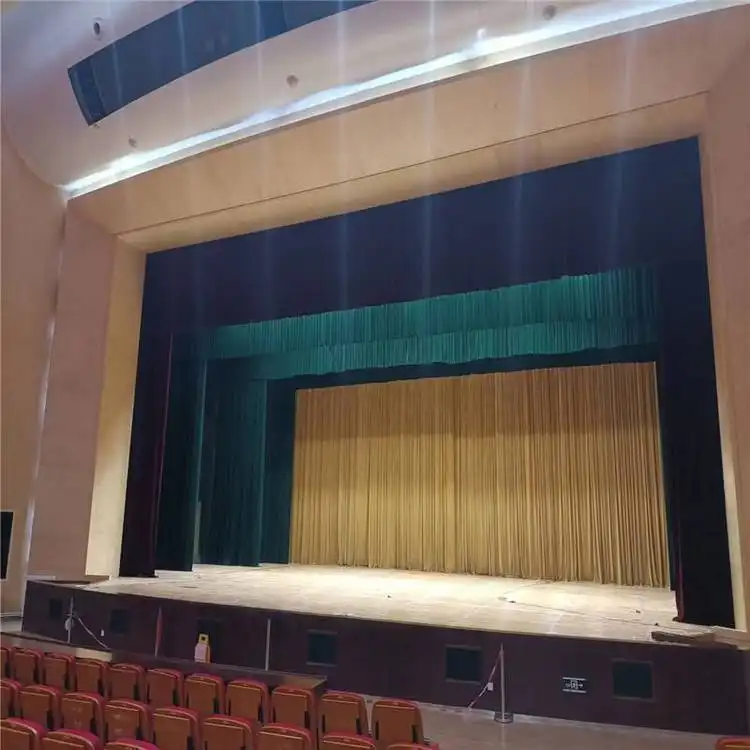
Understanding Stage Curtain Systems and Their Components
Installing professional stage curtain systems is very different from installing window treatments in a home. Specialized fabrics and engineered gear made to last in tough performance settings are combined in these systems.
Fabric Specifications and Fire Safety Standards
For theater drapery, you need materials that are naturally flame-retardant (IFR) and keep their fire-resistant qualities over time. Silk velvet and gold velvet fabrics look very fancy and are great at blocking light, so they are perfect for main house curtains and large drapes. Hemp silk and fabric alternatives are light enough for traveling shows that need to be moved and set up a lot. To keep spectators and artists safe during high-intensity lighting operations, all materials must meet the international fire safety standards set by NFPA 701, DIN 4102 B1, and M1.
Hardware Architecture and Operational Mechanisms
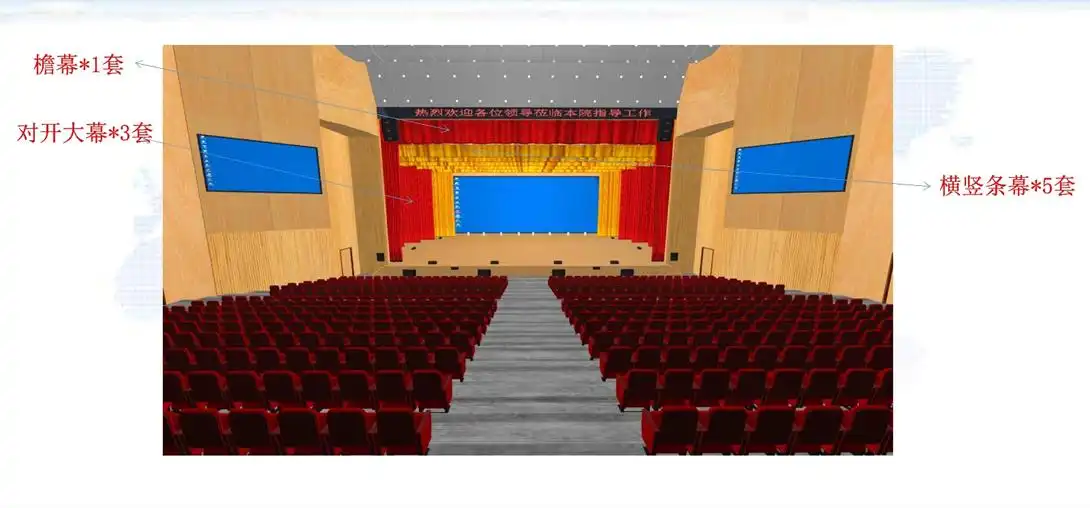
Behind the screen are electric drives, pulleys, and heavy-duty rigging lines that make up the mechanical backbone. Butterfly curtain arrangements with 3x or 2x arc folds make dramatic reveals, while regular folding curtains with vertical pleats (3:1 or 2:1 fullness ratios) look more like they belong in a theater. Cyclorama surfaces for lighting effects and projection can be made out of flat sheets that are sized 1:1. Motorized systems have controls that let you change the speed and set up customizable cue patterns. On the other hand, manual systems use ropes and pulleys and need trained workers.
Configuration Differences Between Venue Types
Premium motor systems with sound dampening are needed for opera houses because they need quiet operation and precise cueing that is in sync with the musical performance. Rapid reconfiguration is important for convention halls, so they need flexible track systems that can be used with different floor plans. Schools have to find a balance between safety and cost, and they often choose semi-automated systems that let students learn the basics of rigging while still protecting against operator mistake.
Common Challenges in Stage Curtain Maintenance
Venue managers have to deal with known patterns of equipment breakdowns that make a stage curtain system unsafe to use and follow safety rules.
Fabric Degradation from Environmental Exposure
Stage lighting makes a lot of heat and UV light, which weakens fabric fibers over time. When dust builds up on surfaces, it makes them rough, which speeds up wear when the curtain moves. Changes in humidity make natural fabrics lose or gain size, which can cause them to hang unevenly and put stress on the seams. Stains from makeup, special effects, or spills can make you look less professional, and if you don't clean them up right away using the right methods, they could make the flame retardant less effective.
Mechanical Failures in Rigging Hardware
Misalignment of the track happens when support pieces become loose or when the structure settles and moves the fixing points. Overloading, bad power source, or not enough cleaning plans can all cause motor burnout. At pulley contact places where repeated twisting goes beyond the limits of wire rope wear, fraying starts to happen in the cable. When carrier wheel bearings get dirty or lose their protective grease, they stop up. This makes the curtain move jerkily, which puts stress on the cloth grommets.
Operational Risks from Deferred Maintenance
Putting off regular checks leads to fails that build up during important events. A worn-out wire could snap during a performance, putting the crowd in danger and causing delays in the show. Fire marshal checks may find flame-retardant certification that isn't up to code, which would mean that the place had to be closed until the problem was fixed. Insurance claims for broken equipment are often denied when maintenance logs show that the equipment wasn't properly maintained. This means that buying budgets are open to unplanned capital expenditures.
Step-by-Step Guide to Caring for Stage Curtains
Structured repair procedures protect the value of the investment and the reliability of operations over the lifecycle of the stage curtain system.
Fabric Cleaning and Preservation Techniques
Weekly vacuuming with soft brush attachments gets rid of surface dust without damaging fibers. To get rid of small spots, use pH-neutral soaps that are safe for flame-retardant fabrics. Never use bleach or harsh solvents that damage protective coatings. Professional dry cleaning every 12 to 18 months gets rid of trapped dirt and keeps the fabric's fire and hand safety features. For theater drapery, always check the cleaner's license to avoid chemical damage that voids warranties.
Hardware Inspection and Lubrication Schedules
Track inspections every three months find bent pieces, loose screws, or carriers that aren't lined up right before they stop working. Put high-performance bearing grease on the wheel sections and hinge points. Wipe off any extra to keep dust from sticking to them. Check the electrical lines for harm from corrosion or arcing and the motor mounting bolts for loosening caused by vibration. By using calibrated tools to measure cable stress, multi-point rigging systems can make sure that loads are spread out evenly.
Storage Protocols for Seasonal Productions
For off-season curtains to stay in good shape, they need to be stored in a climate-controlled space that keeps the temperature between 60°F and 70°F and the relative humidity between 40 and 60%. To keep clothes from getting creases, fold them with acid-free wrapping paper instead of plastic bags, which trap moisture. Put hardware parts in bins that are numbered and have inventory lists next to them. Take pictures of complicated setups to make them easier to reinstall. Before putting curtains back into active service, make sure they are ready for the season by checking their flame-retardant certification.
Partnering with Specialized Service Providers
Maintenance contracts with experts in theater rigging make sure that you can get qualified workers who know how to work with the systems at your place. Comprehensive checks done once a year to make sure that ANSI E1.6 entertainment rigging standards are being met. This protects the business legally during liability audits. Emergency reaction agreements make sure that fixes are done quickly during production runs so that as little money as possible is lost when equipment breaks down. Supplier ties make it easier to get new parts that original makers have stopped making, which extends the service life of older systems.
Comparing Manual vs. Automated Stage Curtain Systems in Terms of Maintenance
When choosing between stage curtain systems, procurement teams have to weigh business needs against the total cost of ownership.
Manual System Maintenance Requirements
Rope-operated curtains need to have their natural fiber cordage checked for wear and UV damage on a regular basis. Depending on how much they are used, the cordage should be replaced every 3 to 5 years. As brass bearings wear out, bushings on pulley wheels need to be replaced from time to time. To keep cloth connection points from getting damaged by shock loading, operators need to be taught the right way to pull. The cost of parts stays low, but the cost of work goes up because the system has to be checked every day before the show and the rigging has to be adjusted every so often.
Automated System Service Considerations
For motorized setups, electrical maintenance like checking circuit breakers, updating control system software, and calibrating encoders are needed to keep the accuracy of the positional information. Thermal imaging scans should be done on three-phase motor systems once a year to find worn-out winding insulation before it fails completely. To make sure they meet life safety standards, battery backup systems for emergency curtain closing need to be replaced every 4 to 6 years. Even though automation makes upkeep more difficult, it lowers the number of injuries caused by repeated strain on technical staff and ensures consistent cueing accuracy.
Total Cost Analysis Over Equipment Lifecycle
Even though manual systems are cheaper to buy at first, they cost more in the long run because they need more operating staff. Automated solutions require a big investment up front, but they save money in the long run on labor costs and improve the quality of the show by using computers to control the time. Venues that host 200 or more shows a year usually get their money back on investments in automation within 7 to 10 years, thanks to fewer technical staff needs and better production capabilities. Manual methods are often more cost-effective for educational sites with limited event schedules.
Best Practices and Tips for Long-Term Stage Curtain Performance
Strategic planning makes a stage curtain system last longer while still meeting safety standards and looking good.
Material Selection Criteria
Choose IFR fabrics over chemically treated ones that lose their fire protection after being cleaned many times. Gold velvet lasts longer than regular velour in high-traffic areas, which makes the higher cost worth it by extending the time between replacements. Custom color matching using proven Pantone standards makes sure that the look stays the same across multiple procurement rounds. This helps business settings or educational theater programs keep their brand identity.
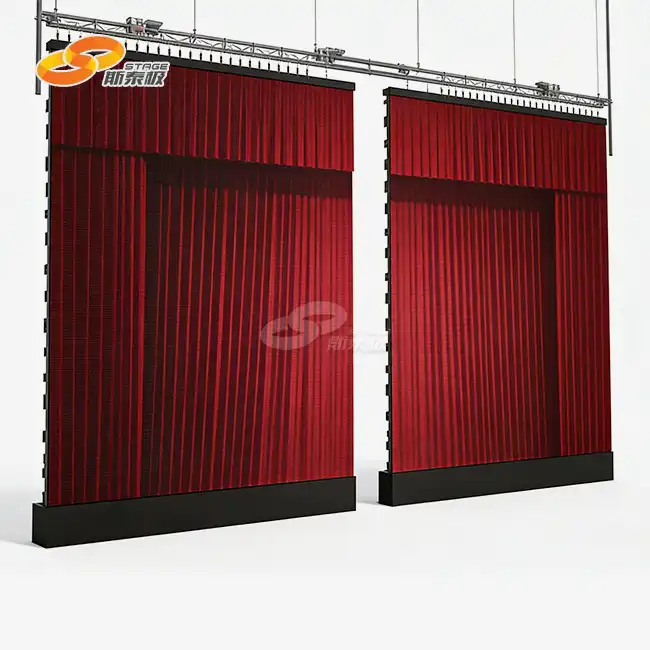
These quality standards are built into our Stage Flame-Retardant Backdrop Curtain, which is made from approved fabrics that meet international fire codes. Butterfly curtain arrangements with 3x arc folds create dramatic visual effects in proscenium stages, while flat 1:1 panels are used for cycloramas that need flat projection surfaces. There are many types of materials, such as silk velvet, hemp silk, and specialized technical fabrics, that can be used for a wide range of events, from traveling shows to permanent installations.
Implementing Predictive Maintenance Programs
Digital tracking systems keep track of when service is due and set off automatic notes for planned checks and part replacements. Motorized systems have vibration monitors that pick up on bearing wear patterns before they make noise. This lets maintenance be planned for off-peak times instead of having to be done quickly during production runs. Thermal tracking finds weak electrical connections so that motor breakdowns that leave curtains hanging in dangerous places don't happen.
Staff Training and Documentation Standards
Comprehensive operator training that includes how to properly handle the screen, how to use the emergency manual switch, and how to fix basic problems lowers the damage that users cause. Having photographic records of how the installation was originally set up makes it easier to restore after temporary changes were made for events. Maintenance logs that show regular service times are required by insurance companies and fire marshals for checks. They also provide information for warranty claims against parts breaking down too soon.
Conclusion
For stage curtains to be properly cared for, the cloth must be kept in good condition, the hardware must work well, and there must be system-specific upkeep procedures followed. When purchasing managers set up structured inspection plans, work with skilled service providers, and put quality products first, they get a better return on their investment because their equipment lasts longer and there are fewer problems with operations. Instead of just looking at the original cost, the decision between manual and automated systems should be based on how the place is used, the availability of technical help, and the long-term budget. Proactive maintenance planning turns stage curtain systems from possible problems into reliable performance assets. This has been shown by successful implementations at places like school plays and professional opera houses.
FAQ
How often should professional stage curtains undergo cleaning?
Active areas should be vacuumed once a week with soft tools to keep dust from building up. For main house curtains that get a lot of use, professional dry cleaning should be done every 12 to 18 months. For specialty curtains that don't get used very often, the time between cleanings could be extended to 24 months. To stay safe, always make sure that the cleaning service you hire has the right certifications for treating flame-resistant fabrics.
Can we retrofit automation onto existing manual curtain systems?
How possible it is to retrofit relies on the current track system, the weight of the curtain, and the electrical infrastructure that is already in place. To handle motor loads, standard tracks often need to be strengthened, and old gear may need to be replaced completely to meet new safety standards. Qualified theater rigging workers do full site surveys to find out if the solution is more cost-effective than replacing the whole system.
What fabric specifications ensure durability in high-traffic venues?
Heavyweight fabrics (16–24 oz/sq yd) with reinforced selvages and grommets that are rated for regular riding are good for high-use situations. Chemically handled materials don't work as well as naturally flame-retardant materials because they lose their fire safety over time when they are cleaned. Gold velvet is more resistant to wear and tear than regular velour, so it's worth the extra money because it lasts longer between repairs in harsh settings.
Partner with Sh Stage for Comprehensive Stage Curtain System Solutions
Sh Stage has specialized in high-precision stage equipment manufacturing for over 15 years, delivering direct factory advantages without intermediaries. Our Jiangsu production facility supplies flame-retardant backdrop curtains, motorized track systems, and full rigging solutions to theaters, performance venues, and entertainment complexes worldwide.
Notable projects include 54 hoist systems and fireproof isolation screens at Yanji Dinosaur Kingdom's Jindou Art Theater and steel rigging infrastructure at Suzhou High-speed Railway New Town Athletic Hall, demonstrating expertise in complex stage automation.
We provide turnkey services including custom engineering, installation, NFPA 701 and DIN 4102 B1 compliant curtains, and 24/7 multilingual technical support.
Contact us for project inquiry and cooperation:
Website: www.shstage.com/ www.jszbzn.com
Email: info@shstage.com
Tel/WhatsApp: +86 18068792502
As an experienced stage manufacturer, we deliver the technical excellence and responsive service your venue deserves.
References
1. Anderson, T. (2019). Theatrical Rigging Standards and Practices. Entertainment Technology Press.
2. Chen, L. & Williams, R. (2021). "Flame-Retardant Textiles in Performance Venues: Comparative Durability Analysis." Journal of Fire Safety Engineering, 34(2), 145-162.
3. International Association of Venue Managers. (2020). Stage Equipment Maintenance Guidelines for Professional Venues. IAVM Publications.
4. National Fire Protection Association. (2022). NFPA 701: Standard Methods of Fire Tests for Flame Propagation of Textiles and Films. NFPA Press.
5. Robertson, M. (2018). Stage Machinery: Design, Installation, and Safety Management. Focal Press.
6. United States Institute for Theatre Technology. (2021). "Recommended Practice for Entertainment Rigging Maintenance Programs." USITT Technical Standards, Document E1.6-3.

USER EVALUATE
Here is the customer's evaluation of us